


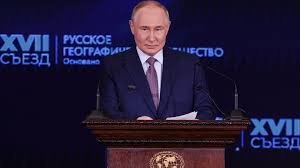
Introduction: Understanding the Impact of Sanctions
Economic sanctions have become a prominent tool of international diplomacy, utilized by nations to influence the behavior of governments or leadership regimes deemed to violate global norms. The concept of sanctions is grounded in the belief that restrictive measures, which may include trade limits, asset freezes, and travel bans, can exert considerable pressure on a nation to compel a change in its actions or policies. Historically, sanctions have been employed with varying degrees of success, creating a complex landscape in which their effectiveness is continuously debated.
The primary objective of sanctions is to alter behavior without resorting to military intervention, making them a preferred choice for many states seeking to address conflicts or aggressive actions. For example, sanctions have been implemented against countries such as Iran and North Korea in efforts to curtail their nuclear ambitions. In theory, by limiting access to vital resources, financial networks, and international cooperation, sanctions should create economic hardship, leading to political change. However, the reality often proves to be more nuanced.
In the case of Russia and President Vladimir Putin, economic sanctions were broadly deployed following the annexation of Crimea in 2014 and further intensified in response to the ongoing conflict in Ukraine. The sanctions targeted key sectors of the Russian economy, including energy, finance, and defense, aiming to weaken the Kremlin’s ability to maintain its aggressive posture. Despite these measures, the effectiveness of sanctions against Putin’s administration remains a point of contention among analysts and policymakers. The resilience of the Russian economy, bolstered by various domestic and international factors, underscores the challenges inherent in using sanctions as a means of achieving geopolitical objectives.
Sanctions Imposed on Russia: A Brief Overview
Since the outbreak of geopolitical tensions related to Russia’s actions, particularly its annexation of Crimea in 2014 and subsequent military interventions, a series of economic sanctions have been implemented against the country. These sanctions represent a collective effort from various nations and international organizations aimed at imposing financial and economic pressure on Russia, with the goal of altering its policies and behavior on the global stage.
The timeline of these sanctions began in March 2014 when the United States, the European Union, and other allied countries imposed travel bans and asset freezes on individuals associated with the Russian government. Over the years, these measures have evolved to target key sectors of the Russian economy. In 2015, sanctions expanded to include restrictions on finance and energy, prohibiting major Russian banks and energy companies from accessing Western debt markets.
One of the most significant multilateral agreements came from the European Union, which continued to impose sanctions through various councils, responding to Russia’s support for separatist movements in Ukraine and military presence in Eastern Europe. These sanctions have persistently focused on the financial, energy, and military sectors, limiting Russia’s ability to fund its operations and access critical technologies.
In addition to financial sanctions, trade restrictions have also been enforced, affecting the export of dual-use goods, which could serve both civilian and military markets. The rationale behind these actions is to curtail Russia’s military capabilities and encourage compliance with international law. The sanctions combined reflect a coordinated effort by the global community to signal disapproval of aggressive actions that threaten regional stability.
In essence, the sanctions imposed represent a significant shift in international relations, aiming to establish a deterrent against further aggression and to uphold the integrity of international norms.
The Resilience of the Russian Economy: Key Indicators
The resilience of the Russian economy in the face of international sanctions has been noteworthy, as various key indicators suggest a capacity for adaptation. One pivotal statistic is the Gross Domestic Product (GDP) growth, which, contrary to some predictions, has remained relatively stable. According to the latest data from the World Bank, Russia’s GDP contracted by only a small margin in the immediate aftermath of the sanctions, and subsequent quarters showed signs of recovery. In particular, the country reported a GDP growth rate of approximately 2.5% in the latest quarter, indicating a surprising degree of economic fortitude.
Foreign direct investment (FDI) levels have also been a subject of scrutiny. Despite the challenging climate, Russia’s government has undertaken measures to attract investment, particularly from non-Western countries. For instance, significant influxes of capital have been noted from China and the Middle East, suggesting that Russia is diversifying its economic partnerships beyond traditional Western allies. This pivot has allowed Russia to mitigate the effects of sanctions while enhancing economic collaboration with emerging markets.
Additionally, trade relationships have shifted, with Russia finding new markets for its exports, especially in the energy sector. While Western nations have reduced their dependency on Russian oil and gas, countries in Asia have gradually increased their imports, effectively replacing lost avenues. For example, a report from the Institute for International Finance highlighted a substantial increase in energy exports to China, reflecting a shift in trade dynamics. Expert analyses indicate that this adjustment is crucial for maintaining economic stability in an environment shaped by sanctions.
In conclusion, the combination of stable GDP growth, shifting foreign investment patterns, and evolving trade relationships underscores the resilience of the Russian economy. Such indicators reflect an ability to adapt to external pressures, demonstrating a level of economic robustness that challenges prevailing narratives regarding the effectiveness of sanctions.
Putin’s Political Maneuvering: Keeping Power Despite Sanctions
In the face of international sanctions imposed due to various geopolitical actions, President Vladimir Putin has exhibited remarkable agility in maintaining his grip on power. The sanctions, aimed at crippling the Russian economy and altering the political landscape, have instead been met with a strategic reinterpretation by the Kremlin. Central to Putin’s strategy is his ability to control the narrative surrounding these sanctions, framing them as unjust attacks on Russian sovereignty.
Putin has adeptly engaged in a public relations campaign that emphasizes resilience and national pride. By portraying sanctions as acts of aggression from Western nations, he has galvanized public support among many Russians who view these measures as an infringement on their country’s sovereignty. This nationalist rhetoric not only bolsters his domestic popularity but also reinforces his position as a defender of the Russian state against external threats.
Furthermore, the Kremlin has shown resourcefulness in navigating economic challenges brought about by the sanctions. By diversifying its trading partners, particularly through strengthened ties with nations that are not aligned with the West, Russia has sought to mitigate the potential economic fallout. This diversification strategy not only sustains the domestic economy but also presents an image of a robust nation capable of withstanding adversity.
Additionally, the political implications of the sanctions have been carefully considered by Putin. While the economic impact is evident, the sanctions have also provided him with a pretext to consolidate power by suppressing dissent and cracking down on opposition figures. By portraying dissent as a betrayal during difficult times, he further secures his position and stifles political competition.
Overall, Putin’s political maneuvering in response to sanctions illustrates a calculated approach where he leverages nationalism and resilience to maintain domestic support and control, ultimately ensuring the continued effectiveness of his regime.
The Global Response to Russian Sanctions: Allies and Opponents
The global landscape concerning sanctions imposed on Russia has revealed a multifaceted arena of both support and opposition. Following Russia’s aggressive actions, particularly the annexation of Crimea in 2014 and the ongoing conflict in Ukraine, numerous Western nations have rallied to impose economic sanctions aimed at isolating Russia politically and economically. The United States and the European Union have led these efforts, targeting key sectors such as finance, energy, and defense. Sanctions have been designed to limit Moscow’s access to international markets and inhibit its ability to conduct trade effectively.
However, the international response has not been uniformly supportive of these sanctions. Several countries, particularly those with strong economic ties to Russia, have chosen to oppose or ignore such measures. For example, nations including China, India, and Turkey have refrained from imposing significant sanctions and continue to engage in extensive trade with Russia. This divergence in response underscores the complexities of international relations, revealing that economic interests often dictate a country’s foreign policy decisions.
Moreover, some countries that oppose the sanctions assert that these measures disproportionately affect ordinary citizens and hinder diplomatic solutions. They argue for engagement with Russia rather than isolation, highlighting the need for a balanced approach to resolve conflicts and restore stability. As sanctions remain a pivotal tool in international relations, the divide between those who advocate for them and opponents underscores the challenges of achieving a unified global stance. This complex interplay between allies and adversaries continues to evolve as geopolitical tensions shift, illustrating that sanctions, while instrumental, are not a panacea in addressing international conflicts.
The Humanitarian Impact of Sanctions: Civilian vs. Political Fallout
The imposition of sanctions on Russia, particularly in response to its geopolitical actions, is often justified through the lens of political strategy aimed at coercing compliance and signaling disapproval. However, the humanitarian impact of these sanctions must be examined closely, as they often inadvertently affect ordinary citizens more acutely than the political elites they are designed to target.
Sanctions are primarily envisioned to cripple the economic resources that support political regimes. Yet, the reality is that the Russian populace has borne the brunt of this economic fallout. Sanctions have led to increased prices for basic goods, diminished access to essential services, and significant economic distress among families. According to various reports, the restriction of imports significantly hampers the availability of food and medicine, leading to a deterioration in living standards. Consequently, ordinary Russians face crippling inflation, reduced incomes, and at times, scarcity of basic necessities.
While the objective of political sanctions is to pressure the Russian government to alter its course of action, the effects on civil society are often counterproductive. The populace, rather than mobilizing against their leaders, may find avenues to support them as a response to perceived external aggressions. This dynamic complicates the established narrative that sanctions can lead to swift political change. Instead, public sentiment may coalesce around nationalistic perspectives, viewing the sanctions as attacks on sovereignty rather than a means to enforce political compliance.
The dissonance between the intended political effects of sanctions and their humanitarian consequences raises critical questions about the efficacy of such measures. As the sanctions linger, it becomes imperative to consider their long-term impact not only on the leadership but also on ordinary citizens who are often caught in the crossfire of geopolitical maneuvering.
Experts Weigh In: Views on the Effectiveness of Sanctions
The imposition of sanctions on Russia in response to its actions in Ukraine has elicited a variety of perspectives from experts across political and economic fields. Some analysts argue that sanctions have largely been ineffective in bringing about the desired changes in Russian behavior, contending that the resilience of the Russian economy has undermined their intended impact. They argue that while sanctions might cause short-term economic pain, they have not fundamentally altered the Kremlin’s strategic calculations. According to some geopolitical experts, President Putin has managed to insulate his administration from the consequences of sanctions through various means, including the development of closer ties with allied nations willing to provide support in the form of trade or finance.
Conversely, there are economists who argue that sanctions have had a noticeable effect on Russia’s financial system over time. They suggest that while Russia may have withstood the brunt of sanctions initially, the long-term economic ramifications could lead to gradual shifts in policy. These experts point to declining foreign investments, increased inflation rates, and a weakened ruble as indicators that sanctions are taking a toll on the economy. Furthermore, some argue that sanctions have galvanized public opinion within Russia, uniting citizens in support of the government in the face of outside pressure, potentially reinforcing Putin’s position rather than undermining it.
Amid these contrasting views, a common consensus among analysts is that sanctions are a complex tool of foreign policy. They may not yield immediate results, but they are part of a broader strategy aimed at exerting pressure on the Kremlin. Therefore, while their direct effectiveness can be debated, there remains an ongoing discussion about their role in shaping international relations and influencing geopolitical dynamics.
The future of sanctions against Russia presents a complex landscape, existing within a framework of evolving geopolitical dynamics and economic realities. As Western nations grapple with the efficacy and consequences of imposing sanctions, it becomes increasingly critical to analyze their potential trajectories. Firstly, it is feasible to expect that sanctions will continue to evolve in response to Russia’s actions in the international arena. The potential for new sanctions may emerge, particularly as global tensions increase or if Russia escalates its military or aggressive postures further. Diplomatic channels may be increasingly utilized to enforce these measures, seeking coordinated responses from allies and partners.
Moreover, the adaptation of existing sanctions to target specific sectors or individuals within Russia may take precedence over blanket measures. This shift could reflect a more nuanced understanding of the Russian economy, where different sectors may respond variably to sanctions. Given Russia’s dependence on energy exports, future sanctions might focus heavily on this critical revenue stream, seeking to diminish the Kremlin’s financial capabilities. Innovations in the sanctioning approach could also include secondary sanctions against nations or entities that choose to support Russia economically, thereby amplifying the effects of the initial measures.
In contemplating Russia’s economic and geopolitical standing, several scenarios could unfold. The imposition of effective sanctions might lead to greater isolation for Russia, spurring a more profound pivot towards non-Western alliances, particularly with countries like China and Iran. Conversely, a protracted stalemate could foster a sense of resilience within Russia, incentivizing the regime to adapt through alternative partnerships or domestic economic strategies. As the landscape continues to shift, both the West and Russia must consider the long-term implications of sanctions not just on immediate objectives but also on the geopolitical balance in the broader context of global affairs.
Conclusion: Lessons Learned from the Sanctions against Russia
The imposition of sanctions against Russia has served as a focal point for international discourse on foreign policy tools and their effectiveness. One of the primary lessons drawn from the sanctions is the observation that such punitive measures often elicit a complex range of responses from targeted regimes. In the case of Russia under President Vladimir Putin, the sanctions were expected to cripple the economy and pressure the leadership into changing its aggressive stance. However, these economic constraints did not yield the anticipated capitulation to international demands.
Current analysis suggests sanctions can reinforce nationalistic sentiments among the populace, entrenching support for leaders like Putin, rather than destabilizing their hold on power. This phenomenon highlights the potential counterproductive nature of sanctions. Instead of isolating leaders, they can inadvertently consolidate their control by rallying citizens around a common adversary perceived to threaten national sovereignty.
Moreover, the international community must recognize that sanctions often take time to manifest their intended effects, if ever. The economic repercussions for Russia have undoubtedly been severe, yet the long-term ramifications remain to be seen. This calls into question the efficacy of sanctions as an immediate solution, urging policymakers to adopt a more nuanced understanding of their capabilities and limitations.
Ultimately, the case of the sanctions against Russia illustrates critical lessons about the tools of diplomacy. It advocates for a careful consideration of both the potential unintended consequences and the need for complementary strategies that go beyond economic deterrence. As nations navigate the complexities of international relations, understanding the multifaceted nature of sanctions will be crucial in formulating a more effective global response to aggression.


