


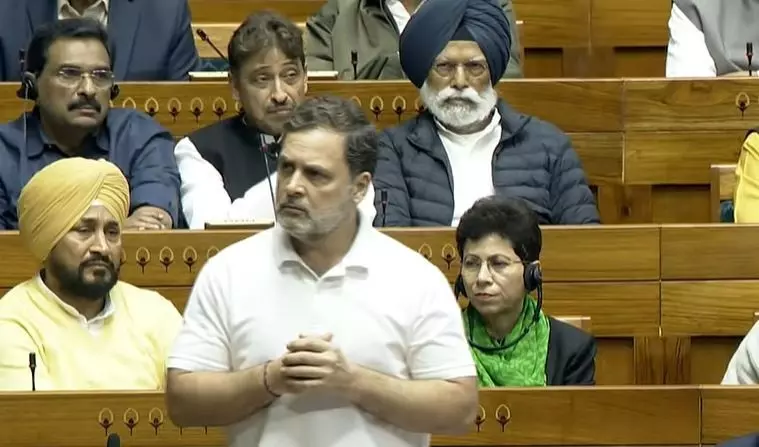
The Essence of the Debate
The landscape of international trade and data policies in India has become a focal point of concern, particularly through the lens of prominent political figures like Rahul Gandhi. As India navigates a complex web of economic agreements with the United States, the implications for its data governance and trade practices have emerged as pressing issues. Gandhi’s apprehensions reflect deeper anxieties regarding sovereignty, privacy, and the potential impact on local industries.
Recent U.S. deals with India, part of a broader strategy to enhance trade relationships, raise significant questions about data ownership and consumer privacy. These agreements highlight the growing trend of digital commerce, where vast amounts of personal and sensitive information are generated and exchanged. Concerns arise particularly when it comes to who controls this data and how it is utilized, particularly in a foreign context.
Moreover, the intersection of trade agreements and data policies may influence India’s economic trajectory in the coming years. Rahul Gandhi’s emphasis on these issues underscores the potential risks posed to Indian businesses that could find themselves at a disadvantage when competing against larger multinational corporations benefiting from these arrangements. His criticisms serve as a catalyst for broader discussions on how to protect national interests while fostering international cooperation.
As such, the core theme of this debate centers on balancing the benefits of enhanced trade with the necessity of safeguarding India’s data sovereignty. This dialogue is not only crucial for policymakers but also for everyday citizens who rely on digital infrastructures that may be impacted by these developments. Engaging in this conversation will be pivotal in shaping India’s future in a rapidly evolving global economic landscape.
Rahul Gandhi: A Brief Overview
Rahul Gandhi, born on June 19, 1970, is an Indian politician and a prominent member of the Indian National Congress (INC), one of the oldest political parties in India. He is the son of Rajiv Gandhi and Sonia Gandhi, and the grandson of Indira Gandhi and great-grandson of Jawaharlal Nehru, all of whom have served as Prime Ministers of India. This lineage places him in a unique position within Indian politics, carrying the legacy of a family deeply ingrained in the nation’s history.
Having graduated from Harvard University and the University of Cambridge, Gandhi has developed a comprehensive understanding of global political dynamics and economic frameworks. His political career began in 2004 when he was elected to the Lok Sabha, India’s lower house of Parliament, from the Amethi constituency in Uttar Pradesh. Over the years, he has held various roles, including vice-president and president of the INC, which have seen him play a significant part in shaping the party’s agenda and strategy.
Rahul Gandhi has consistently expressed concerns regarding India’s increasing integration into the global economy, particularly within the contexts of data security and international trade agreements. His advocacy for robust data protection measures reflects his belief that the digital landscape’s expansion must be accompanied by a framework ensuring the privacy and rights of Indian citizens. Furthermore, he has critiqued previous trade agreements, arguing that they may compromise Indian industries and labor standards. This viewpoint has led him to question the motivations behind international deals, particularly those involving major economies like the United States.
Through his engagement with these complex issues, Rahul Gandhi’s position shapes the ongoing dialogue surrounding India’s trade future, raising critical questions that warrant attentiveness and consideration in light of global economic trends.
Understanding India’s Data Landscape
India’s data landscape is shaped by a multitude of factors, including a rapidly growing digital economy, evolving regulatory frameworks, and increasing public awareness about privacy issues. With over 1.3 billion people, India has emerged as one of the largest data producers globally, fueling innovation and economic growth while simultaneously presenting significant challenges regarding data management and privacy.
The legal framework governing data protection in India is primarily the Information Technology Act of 2000, supplemented by various rules and regulations that have evolved since its inception. However, the absence of a comprehensive data protection law has led to complexities in data governance. The Personal Data Protection Bill, a pivotal piece of legislation currently under discussion, aims to establish a robust framework to protect individual privacy rights while balancing the need for data-driven business objectives. This proposed bill emphasizes user consent, data localization, and accountability for data handlers.
Despite these efforts, challenges persist in addressing the nuances of data privacy. The juxtaposition of economic growth against the backdrop of stringent data laws poses a dilemma for businesses that rely on data for operational efficiency and customer engagement. Issues such as data breaches, lack of awareness, and inadequate compliance frameworks often undermine the trust of consumers. Furthermore, regional disparities in digital infrastructure add layers of complexity to the implementation of data governance.
Ultimately, the dialogue surrounding India’s data landscape cannot be separated from its implications for trade and international relations. As global standards for data protection evolve, there is a pressing need for India to harmonize its policies in a manner that nurtures economic potential while safeguarding citizen rights. Rahul Gandhi’s concerns spotlight these critical intersections between data, privacy, and the future of India’s digital trade landscape.
The Nature of the US Deal
The recent agreement between the United States and India marks a significant milestone in their bilateral relations, particularly in the realms of data sharing and trade. This deal, commonly referred to as the US-India Data and Trade Agreement, aims to foster deeper economic ties while addressing concerns about data sovereignty and security. Central to the agreement is the facilitation of seamless data exchange, which will boost various industries including technology, healthcare, and manufacturing. By enabling easier data transfers, the agreement is designed to streamline processes and enhance operational efficiencies across sectors that heavily rely on data-driven solutions.
Moreover, the trade components of the deal include provisions for tariffs and import-export regulations, which could significantly alter the landscape of trade between the two nations. The agreement is expected to lower tariffs on a range of goods, thereby promoting bilateral trade volumes and allowing Indian exporters to gain a competitive edge in the US market. However, as with any international negotiation, there are concerns regarding clauses that may infringe upon India’s autonomy in setting its own economic policies. Issues that require careful consideration include potential stipulations about compliance with US data privacy standards, which may not align with India’s existing regulatory framework.
Additionally, the deal encompasses a commitment to mutual investments which aims to encourage American companies to increase their footprint in India, subsequently leading to job creation and technological advancements. Nevertheless, Indian stakeholders have voiced apprehensions about the potential overreach of US firms into local markets, raising questions about fair competition and the safeguarding of national interests. Balancing the benefits of enhanced trade and data cooperation with the imperative to maintain sovereignty will be crucial as both nations move forward in the implementation of this comprehensive agreement.
Concerns Raised by Rahul Gandhi
Rahul Gandhi has articulated several pressing concerns regarding the recent deal, particularly emphasizing the potential risks it poses to data privacy, economic independence, and the future landscape for Indian businesses and individuals. One of the foremost issues he highlights is the vulnerability of personal and national data in the face of foreign acquisition and control. The apprehension is primarily rooted in the idea that a significant chunk of sensitive data could be harvested and exploited by multinational corporations, leading to breaches of privacy and security.
Moreover, Gandhi raises alarm regarding the economic independence of India. He points out that reliance on foreign entities for data management and trade systems could lead to reduced autonomy over critical economic decisions. This diminished control could inhibit India’s capacity to protect its interests in the global economy and foster a dependency that could be detrimental in the long run.
Another significant concern expressed by Gandhi pertains to the implications for Indian businesses. He posits that the deal could create an uneven playing field where local firms struggle to compete against well-resourced foreign corporations equipped with advanced technology and vast capital. This scenario could stifle innovation and entrepreneurship within the country, leading to an adverse impact on the economic fabric of India.
Gandhi’s apprehensions extend to the societal impact as well. With the increasing penetration of tech-driven solutions in daily affairs, the legitimacy and safeguards concerning the use of personal data remain crucial. The lack of robust regulatory frameworks to govern data usage can lead to exploitation, consequently undermining consumer trust. Thus, Rahul Gandhi’s concerns are not merely about the deal itself but reflect broader implications that could resonate through various sectors of Indian society.
Political Reactions and Counterarguments
Rahul Gandhi’s recent remarks regarding India’s evolving data and trade landscape have elicited a spectrum of responses from political figures and parties across the spectrum. His call for cautious engagement with international trade agreements has been met with both support and criticism.
Supporters of Gandhi’s perspective argue that his concerns highlight the potential risks that India might face in a globalized economy, especially regarding data privacy and the sovereignty of trade practices. These individuals emphasize that, in an age where data is poised to become a crucial currency, vigilance in negotiating international treaties is paramount. Several opposition leaders have echoed this sentiment, raising worries that current trade policies may favor multinational corporations at the expense of local businesses and consumer rights.
Conversely, critics of Gandhi’s position assert that his approach is overly cautious and could hinder India’s economic progress. Proponents of free trade argue that engaging fully with global markets can enhance technological innovation and economic growth. They caution that excessive skepticism regarding international agreements may alienate potential foreign investors, thereby stunting India’s economic competitive edge. This group underscores the need for a balanced approach that embraces globalization while still safeguarding national interests.
The divergent opinions reflect not only the complexities surrounding India’s data and trade future but also underlying party ideologies. While supporters of Gandhi highlight the necessity of comprehensive frameworks that prioritize data security, critics caution against stifling economic expansion through restrictive policies. As these discussions continue, the political landscape will play a significant role in shaping India’s approach to navigating its data and trade ambitions in an increasingly interconnected world.
The Implications for India’s Global Trade Relations
As India navigates the complexities of the recent deal highlighted by Rahul Gandhi, the implications for the country’s global trade relations are multifaceted. On one hand, this agreement presents potential opportunities to deepen trade ties with various nations, fostering an environment for increased foreign investments and collaborations. The significance of data regulation within the deal is particularly pertinent, as it aims to align India with international standards, which can enhance the country’s competitive edge in the global marketplace.
Moreover, the deal may lead to enhanced partnerships with technologically advanced countries, as it emphasizes a framework for data privacy and protection. This is crucial for global players who prioritize data security when entering new markets. A more robust regulatory environment can, in turn, attract multinational companies looking for stability in their operations.
Conversely, the concerns raised by Gandhi about the potential implications for India’s sovereignty and regulatory autonomy cannot be overlooked. As India seeks to position itself as a global trade hub, it must also contend with the risk of dependency on foreign entities, thereby compromising its capacity to set independent policies. This could further strain relations with nations that prioritize domestic data sovereignty, as they may resist collaborations that compromise their regulatory frameworks.
In the broader context, the balance between safeguarding national interests and fostering international trade will be pivotal. The ongoing discussions suggest that while there are opportunities for growth and collaboration, it is imperative for India to strategically navigate the challenges posed by the deal. Therefore, ensuring that the terms of engagement are mutually beneficial will be essential for preserving India’s standing in the rapidly evolving global trade landscape.
As India stands on the brink of a transformative phase in the global data trade landscape, the potential scenarios for the nation necessitate a thoughtful evaluation by policymakers. The advent of data-centric enterprises and digitization has opened new avenues for economic growth; however, it also brings inherent challenges that must be carefully addressed to ensure sustainable benefits for the country.
To secure significant advantages from the data economy, India needs to establish robust data governance frameworks. These frameworks must prioritize data protection, privacy, and cybersecurity, fostering an environment of trust among businesses and consumers. By crafting comprehensive regulations that comply with global standards, India can position itself as a reliable player in the international data trade.
Furthermore, strategic partnerships with other nations could facilitate technology sharing and enhance India’s capabilities in data analytics and management. Collaboration opportunities could extend to research and development, thereby enabling Indian businesses to innovate and compete on a global scale. Policymakers should explore international agreements that not only protect India’s data sovereignty but also encourage the influx of foreign investment in the data sector.
In addition to regulatory measures, investments in infrastructure are crucial to support the burgeoning data trade. Enhanced broadband connectivity, cloud computing facilities, and robust data centers will provide the backbone necessary for entities that engage in large-scale data transactions. This infrastructure will not only support business operations but will also ensure that data handling adheres to prescribed standards.
Lastly, continuous dialogue with stakeholders, including industry leaders and civil society, will be paramount. These discussions can illuminate potential pitfalls and highlight best practices while ensuring that the focus remains on workforce development and education in data literacy. This proactive approach can prepare India for the complexities of navigating the future data trade landscape, ensuring that both the economy and its citizens can thrive in the digital age.
Conclusion: A Call for Thoughtful Engagement
In examining the intricacies of international trade agreements, particularly in reference to Rahul Gandhi’s insights on India’s role in the global data economy, it is evident that a nuanced approach is imperative. Gandhi’s apprehensions underline a critical dialogue regarding the implications of international deals on India’s data sovereignty and economic stability. These discussions stress the need for India’s policymakers to engage more thoughtfully with the frameworks proposed by foreign nations.
The alignment of national interests with global trade dynamics introduces both challenges and opportunities. The necessity for India to safeguard its data, which is a vital asset in today’s economy, cannot be overstated. As international corporations increasingly seek to integrate their operations with local markets, the protection of sensitive information becomes paramount. Policymakers must carefully consider the long-term ramifications of any agreements, ensuring they do not compromise national security or economic integrity.
Furthermore, fostering domestic innovation should be a core element of enhancing India’s data and trade framework. By promoting local enterprises and technological advancements, India can position itself as a leader in the digital space, mitigating dependency on foreign entities. Engaging in constructive dialogues with international partners will require transparency and a clear articulation of India’s strategic goals and concerns.
Ultimately, a balanced approach to data management must balance international trade benefits with the preservation of national priorities. The need to foster competition while encouraging collaboration with trusted global partners remains crucial. Through thoughtful engagement, India can secure its place in the evolving global trade landscape while preserving the integrity of its data and economic interests.


