


When we think of European food, our minds often drift to vacation memories—a crisp pizza in Naples, a rich croissant in Paris, or perhaps a hearty bratwurst in Munich. For many Americans, these foods represent indulgence. Yet, when we look at health statistics, many European nations consistently rank higher in longevity and lower in chronic disease rates than the United States. This disconnect leads to a common question: How can cultures celebrated for cheese, wine, and bread also be some of the healthiest in the world?
The answer lies not just in specific ingredients, but in the overall approach to eating. Traditional European diets are less about strict calorie counting and more about a historical relationship with local, seasonal food. While the “Standard American Diet” has evolved rapidly alongside industrial food processing, traditional European patterns have deep roots in agricultural history and cultural rituals.
Understanding these dietary patterns offers more than just a history lesson; it provides a practical roadmap for Americans looking to improve their relationship with food without sacrificing flavor. By looking past the tourist menu and into the home kitchens of Europe, we can find sustainable habits that fit right into our lives back home.
What Are Traditional European Diets?
To understand traditional European diets, we first have to clarify what they are not. They are not the “fad diets” we often see on magazine covers that promise weight loss in ten days. Instead, they are regional eating patterns that evolved over centuries based on geography, climate, and available resources.
At their core, these diets are defined by agrarian roots. Before modern supermarkets made strawberries available in December, Europeans ate what grew nearby. This meant diets were naturally diverse. A family in Sicily ate vastly different foods than a family in Stockholm, yet both followed a “traditional” diet. The common thread was a reliance on whole, minimally processed ingredients prepared at home.
It is also important to note that these traditional diets are distinct from modern Western diets. Just like in the US, fast food and convenience meals have infiltrated Europe. However, when nutritionists and historians talk about “Traditional European Diets,” they are referring to the heritage eating patterns—how grandmothers cooked—rather than what a teenager in Berlin might grab at a drive-thru today.
Why Americans Are Interested in European Diets
The interest in European eating habits has surged in the US, largely driven by a desire for better health outcomes. We frequently see headlines about the “French Paradox”—the observation that French people have relatively low rates of heart disease despite a diet rich in saturated fats—or the incredible longevity of residents in Mediterranean “Blue Zones.”
For many Americans, the appeal is the lack of deprivation. American diet culture often revolves around restriction: cutting carbs, cutting fat, or cutting gluten. European diets, conversely, seem to celebrate food. The idea that one can eat bread, enjoy dairy, and drink wine while maintaining good health is incredibly attractive to a culture exhausted by restrictive dieting cycles.
Furthermore, there is a growing desire for simplicity. Navigating the aisles of an American grocery store requires reading complex nutrition labels to spot hidden sugars and additives. Traditional European eating offers a return to basics: real ingredients, simple preparation, and meals that don’t require a chemistry degree to understand.
Major Traditional European Diets Explained
While there are dozens of micro-cuisines across the continent, four major dietary patterns stand out when discussing health and tradition.
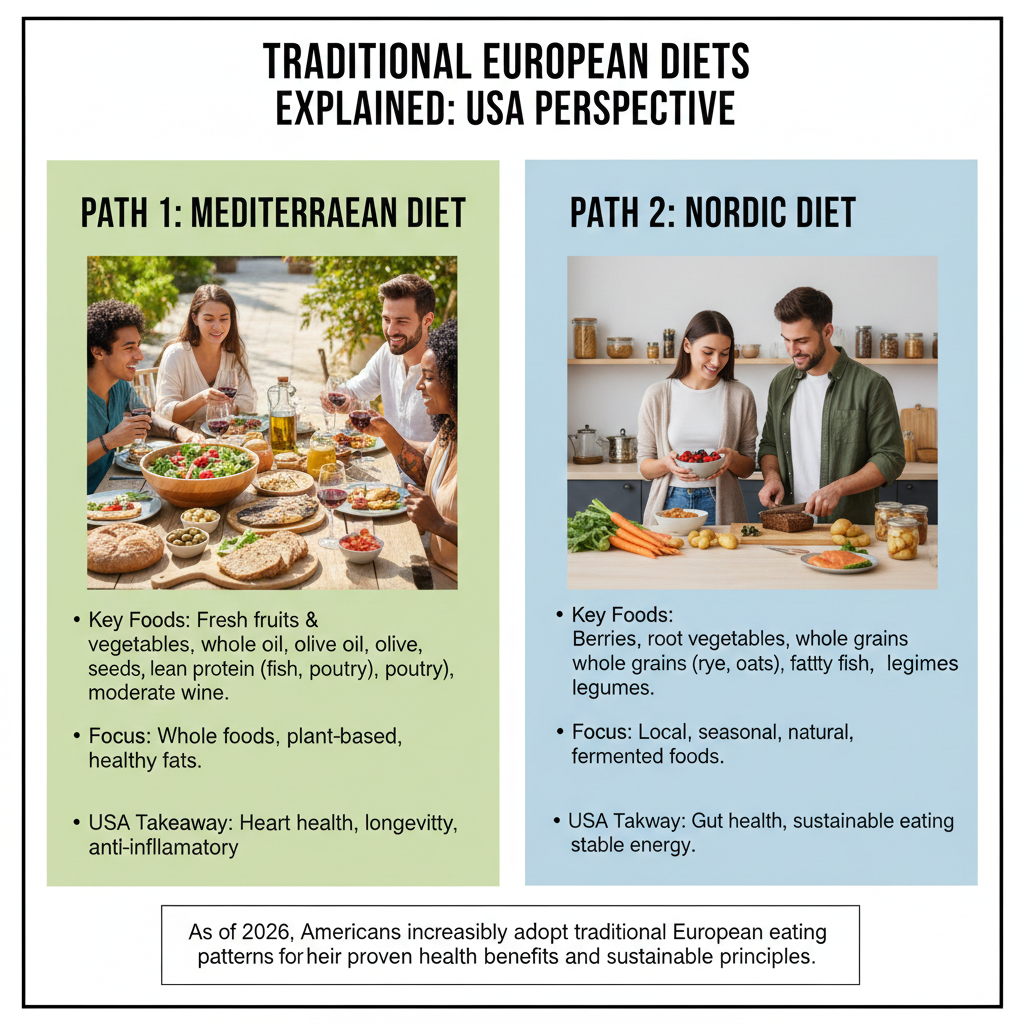
Mediterranean Diet
This is perhaps the most famous European export regarding nutrition. Originating in Southern Europe—specifically regions like Southern Italy, Greece, and Spain—this diet is extensively studied for its heart-health benefits.
- Key Components: The superstar here is extra virgin olive oil, used as the primary source of added fat. The diet is plant-forward, relying heavily on vegetables, fruits, legumes, nuts, and seeds.
- Proteins: Fish and seafood are consumed regularly, while poultry, eggs, and dairy (cheese and yogurt) are eaten in moderation. Red meat is traditionally a rarity, reserved for special occasions.
- Grains: Whole grains play a significant role, but they are often ancient grains or simpler breads compared to American sandwich loaves.
Nordic Diet
Think of this as the colder climate cousin of the Mediterranean diet. Native to Scandinavia (Norway, Sweden, Denmark, Finland, and Iceland), it proves you don’t need warm weather to eat well.
- Key Components: Instead of olive oil, which doesn’t grow there, the Nordic diet relies on canola (rapeseed) oil. Berries (lingonberries, blueberries) are a major antioxidant source. Root vegetables like carrots, beets, and potatoes are staples.
- Proteins: Fatty fish like salmon, herring, and mackerel are essential, providing high levels of Omega-3 fatty acids.
- Grains: Rye is the grain of choice, often eaten as dense, fiber-rich sourdough rye bread.
French Traditional Diet
The traditional French way of eating is less about specific “superfoods” and more about structure and quality.
- Portion Control: A traditional French meal might include three or four courses, but the portions are much smaller than American standards.
- Balance: If a lunch is heavy and rich, dinner will likely be light—perhaps just a soup and salad.
- Freshness: There is a strong cultural insistence on high-quality, fresh ingredients. Markets are visited frequently, ensuring food is eaten at its peak.
- Meal Structure: Snacking is culturally discouraged. Eating happens at mealtimes, promoting better appetite regulation.
Eastern European Diets
Often overlooked in health discussions, the traditional diets of countries like Poland, Hungary, and Romania have robust nutritional profiles.
- Hearty and Seasonal: Because of harsh winters, this diet excels in preservation.
- Fermentation: Fermented foods like sauerkraut, pickled vegetables, and kefir are staples. These provide natural probiotics that support gut health.
- Soups and Stews: Nutrient-dense soups (like Borscht) allow for a high consumption of vegetables and bone broths, which are filling and hydrating.
Common Principles Across European Diets
Despite the difference between a sunny Greek salad and a hearty Polish stew, these diets share foundational principles that contribute to their success.
Emphasis on Whole Foods
Whether it’s a tomato in Naples or a potato in Dublin, the focus is on the ingredient itself. Traditional cooking does not rely on pre-packaged mixes. The flavor comes from the food, enhanced by herbs, spices, and cooking techniques, rather than artificial flavor enhancers.
Fewer Ultra-Processed Products
In the traditional European model, “food” is something that was recently alive. Ultra-processed foods—items with long lists of unpronounceable ingredients—were virtually non-existent in these traditional patterns. Sweetness came from fruit or honey, not high-fructose corn syrup.
Regular, Mindful Meals
Across Europe, eating is an event. It is rare to see people eating while walking down the street or driving. Meals are times to sit down, disconnect from work, and connect with family or colleagues. This mindfulness aids digestion and helps the body signal when it is full.
Typical Foods in Traditional European Diets
To visualize this way of eating, imagine a shopping cart filled with the following:
- Vegetables and Legumes: These are the base of the pyramid. From leafy greens to hearty beans and lentils, plants make up the bulk of the volume on the plate.
- Bread and Grains: Bread is a staple, but it is distinct from the soft, sugary sliced bread common in the US. It is often crusty, dense, made with simple ingredients (flour, water, salt, yeast), and eaten as an accompaniment, not the main course.
- Dairy and Fermented Foods: Cheese and yogurt are enjoyed, but usually in their full-fat versions. The fermentation process in quality cheese and yogurt makes them easier to digest for many people.
- Seafood and Modest Meat Portions: Meat is historically expensive. In traditional diets, a small amount of meat might be used to flavor a whole pot of beans or stew, rather than serving a large steak as the centerpiece of every dinner.
How European Diets Differ from the American Diet
The contrasts between traditional European habits and modern American habits are stark, and they often explain the differences in public health.
Portion Sizes
In the US, value is often equated with volume. We want the biggest drink and the biggest burger for our dollar. In traditional European dining, quality is valued over quantity. A serving of pasta in Italy is typically 3 to 4 ounces, whereas an American restaurant portion might be triple that.
Sugar and Processed Food Intake
The American palate has acclimated to very high levels of sugar, which is added to everything from bread to pasta sauce to salad dressing. Traditional European palates tend to lean more savory or tart. Dessert is often fruit, with sweeter treats reserved for weekends or celebrations.
Meal Timing and Habits
Americans often prioritize efficiency, eating quickly at desks or on the go. Europeans tend to prioritize the break itself. Furthermore, lunch is often the main meal of the day in many European countries, giving the body more time to digest before sleep, whereas Americans often save their largest calorie intake for the evening.
Health Benefits Linked to European Diet Patterns
Adopting these patterns isn’t just about culture; it’s about biology. The science supporting these diets is robust.
Heart Health
The Mediterranean diet is the gold standard for cardiovascular health. The combination of healthy fats (olive oil, nuts), high fiber, and antioxidants reduces bad cholesterol and lowers the risk of heart disease.
Metabolic Balance
By focusing on complex carbohydrates (whole grains, veggies) rather than simple sugars, these diets help regulate blood sugar levels. This lowers the risk of type 2 diabetes and helps maintain consistent energy levels throughout the day.
Longevity Trends
Researchers have consistently found links between these traditional ways of eating and longer life spans. It is likely a combination of the nutrient-dense food and the lifestyle factors—lower stress and strong social connections—that accompany the meals.
Cultural Eating Habits in Europe
You cannot separate the food from the lifestyle. In traditional European culture, a meal is a social anchor.
The “Sunday Lunch” is a sacred tradition in many countries, lasting hours and involving extended family. This strengthens social bonds, which is a known factor in mental and physical health. Furthermore, the tradition of home cooking ensures that people know exactly what is going into their bodies. When you cook from scratch, you control the salt, the fat, and the sugar.
Slower eating is another crucial cultural habit. By lingering over a meal, conversing, and sipping wine slowly, you allow your brain time to register satiety. This natural portion control is far more effective than counting calories.
Can Americans Follow a Traditional European Diet?
The good news is that you do not need to move to Provence or Tuscany to reap these benefits. Adaptation is entirely possible in the United States.
Grocery Considerations
Start by shopping the perimeter of the grocery store where the fresh produce, meats, and dairy are located. Avoid the center aisles where processed foods live. Seek out local farmers’ markets to find seasonal produce that tastes better and offers higher nutritional value.
Lifestyle Adaptations
We can’t always take a two-hour lunch break in the American corporate world. However, we can reclaim dinner. Make a rule to sit at a table—not in front of the TV—for at least one meal a day.
Practical Swaps
- Swap soda for sparkling water or herbal tea.
- Swap vegetable oil for olive oil.
- Swap a bag of chips for a handful of nuts or a piece of fruit.
- Swap the giant steak for a fish fillet or a lentil stew.
Myths About European Diets
“They eat pasta and bread all the time”
It may look that way to tourists, but context matters. In Italy, pasta is a “primi” (first course), served in a small portion before a vegetable or protein dish. It isn’t a giant bowl of Alfredo sauce. The bread is there to sop up sauce, not to be eaten by the loaf.
Wine and Health Misconceptions
While wine is part of the diet, it is almost always consumed with food. This changes how the alcohol is absorbed. It is also consumed in moderation—a small glass or two—rather than binge drinking on weekends.
Are Traditional European Diets Sustainable Long-Term?
One of the greatest strengths of traditional European diets is their sustainability. Because they aren’t restrictive “diets,” they are easy to maintain for a lifetime.
Accessibility and Affordability
Some aspects, like high-quality olive oil or fresh fish, can be expensive. However, the core of these diets—beans, lentils, seasonal vegetables, rice, and potatoes—are some of the most affordable foods in the supermarket.
Lifestyle Compatibility
These diets are flexible. You can eat out at restaurants (choosing simpler, grilled options) and enjoy family gatherings. There are no “forbidden” foods, only foods that are eaten less often. This psychological freedom makes it much easier to stick with healthy habits long-term.
FAQs – Traditional European Diets
What is the healthiest European diet?
While the Mediterranean diet has the most scientific research backing it, the Nordic diet is increasingly seen as equally beneficial. The “healthiest” one is the one that includes foods you enjoy and can stick to consistently.
Do Europeans eat healthier than Americans?
Statistically, Europeans consume more fruits, vegetables, and fiber, and fewer processed foods and sugary beverages than the average American. However, obesity rates are rising in Europe as Western fast food becomes more prevalent.
Is the Mediterranean diet the same everywhere?
No. The diet varies by region. In Greece, you might see more yogurt and feta; in Spain, more pork and tomatoes; in Italy, more pasta and beans. The commonalities (olive oil, veggies) matter more than the specific dishes.
Can European diets work for weight management?
Yes. High fiber content and healthy fats are satiating, meaning you feel full longer. Combined with portion control and mindful eating, this naturally leads to weight stability or loss without aggressive calorie counting.
Are traditional European diets still common today?
In rural areas and among older generations, yes. In major cities, younger generations are moving away from tradition, but there is currently a strong “slow food” movement across Europe trying to preserve these heritage culinary traditions.
Bringing Old World Habits Home
Adopting a traditional European diet doesn’t mean you have to abandon your favorite American foods or start cooking complicated recipes every night. It is about shifting your mindset. It’s about viewing food as a source of nourishment and pleasure rather than just fuel.
By focusing on whole ingredients, shrinking our portions, and taking the time to truly enjoy our meals, we can capture the essence of European health. Start small—perhaps with a pot of soup on Sunday or a walk after dinner. You might find that the “secret” to health isn’t a secret at all, but a return to a simpler, more delicious way of living.


