


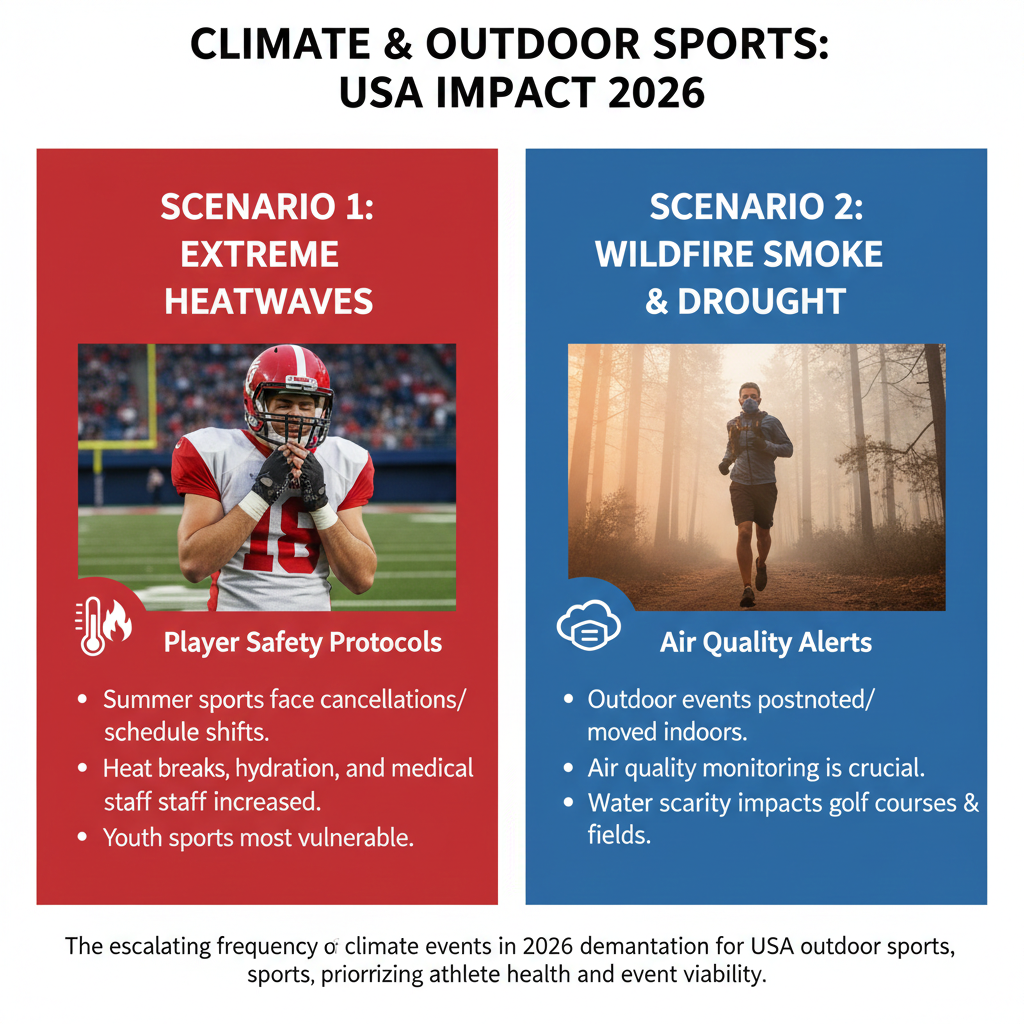
For decades, the image of a football game played in swirling snow or a baseball match paused for a summer downpour has been part of the American sports fabric. However, the relationship between atmospheric conditions and athletic performance is far more complex than a simple rain delay. Weather dictates strategy, influences physical safety, and ultimately determines the viability of outdoor competitions across the United States.
As weather patterns shift and extreme events become more frequent, athletes, coaches, and sports organizations face new challenges. The environment is no longer just a backdrop; it is an active participant in every game, race, and match. Understanding how specific climate factors influence sports is essential for ensuring player safety and maintaining the integrity of competition.
From the sweltering heat of the South to the freezing winds of the Midwest, local climates shape how sports are played. This analysis explores the specific impacts of weather on performance, the physiological toll on athletes, and how organizations are adapting to an increasingly variable environment.
Why Climate Conditions Matter in Outdoor Sports
The interaction between an athlete and their environment is constant. While training focuses on speed, strength, and skill, the body’s ability to perform is strictly limited by external conditions. Climate conditions act as a governor on athletic output; when the environment becomes hostile, the body must divert energy from performance to survival mechanisms like thermoregulation.
In the United States, the geographic diversity creates a wide range of environmental hurdles. A marathon runner in Boston faces different risks than a football player in Miami. As climate variability increases, historical data becomes less reliable for scheduling and preparation. Seasons are shifting, and weather events are becoming more intense, forcing the sports industry to reevaluate how and when outdoor events take place.
Key Climate Factors Affecting Outdoor Sports
Different weather elements present unique challenges to equipment, physiology, and field conditions. Here is how the primary climate factors influence the game.
Heat and Humidity
High temperatures combined with high humidity represent the most significant safety risk in modern outdoor sports. When air temperature exceeds skin temperature, the body relies entirely on evaporation (sweating) to cool down. High humidity creates a barrier to this process, as the air is already saturated with moisture.
Heat Stress and Dehydration
In these conditions, sweat drips off the body rather than evaporating, leading to rapid fluid loss without the benefit of cooling. This accelerates the onset of heat exhaustion and, in severe cases, heat stroke. In the American South and Midwest during late summer, “wet bulb” temperatures—a measure of heat stress in direct sunlight—often reach dangerous levels for high school and professional athletes alike.
Performance Decline in Hot Conditions
Physiologically, the heart must pump blood to the skin for cooling while simultaneously supplying oxygen to working muscles. This competition for blood flow results in a higher heart rate at lower intensities, causing premature fatigue. Sprint times slow down, decision-making becomes sluggish, and endurance capacity drops significantly.
Cold Temperatures
While heat poses an immediate metabolic threat, cold weather fundamentally alters biomechanics and muscle function.
Muscle Stiffness and Injury Risk
In cold environments, the body constricts blood vessels in the extremities to preserve core heat. This vasoconstriction leads to reduced blood flow to muscles and tendons, making them less pliable. Stiff muscles are more susceptible to strains and tears, particularly during explosive movements common in football, soccer, and sprinting.
Endurance and Coordination Challenges
Cold air is denser and often drier, which can irritate the respiratory tract—a condition known as “ski lung” or exercise-induced bronchoconstriction. Furthermore, manual dexterity and fine motor skills degrade rapidly in freezing temperatures. Quarterbacks struggle to grip the ball, and pitchers lose the tactile feedback necessary for breaking pitches, altering the competitive balance of the game.
Wind Conditions
Wind is an invisible force that can drastically alter the trajectory of a game, acting as a variable that defies standardized strategy.
Accuracy and Game Strategy Impacts
In sports dependent on projectile motion, wind speed and direction are critical variables. A 15 mph crosswind can push a football field goal attempt several feet off course. In baseball, wind blowing “in” can turn a home run into a flyout, while wind blowing “out” turns routine pop-ups into runs. Teams must adjust their strategies accordingly, often opting for conservative ground-game approaches in football or altering defensive positioning in baseball.
Sports Most Affected by Wind
While almost all outdoor sports feel the impact, precision sports suffer the most. Golf, tennis, archery, and football kicking games are highly sensitive to gusts. Even in track and field, wind assistance limits are strictly enforced; sprint times recorded with a tailwind over 2.0 meters per second are not considered for record purposes.
Rain and Snow
Precipitation introduces an element of chaos, affecting the friction between the athlete and the playing surface, as well as the grip on the equipment.
Field Conditions and Traction
Rain turns natural grass fields into mud and makes artificial turf slick. This loss of traction forces athletes to slow down their cuts and turns to avoid slipping, which neutralizes the advantage of speedier players. In football and soccer, “mud bowls” often result in lower-scoring, defensive struggles where footing is the primary opponent.
Equipment and Visibility Issues
Water logs equipment, adding weight to uniforms and making balls difficult to handle. In heavy snow, visibility drops to near zero, making it difficult for players to track the ball or see teammates. While snow games are often celebrated for their visual appeal in the NFL, they present significant safety hazards and introduce high variance into the game’s outcome.
Air Quality and Pollution
A growing concern in the western United States is the impact of air quality, driven largely by wildfire seasons that overlap with fall sports.
Respiratory Performance
Particulate matter (PM2.5) from smoke can penetrate deep into the lungs, reducing lung capacity and the efficiency of oxygen exchange. For elite athletes operating at maximum aerobic capacity, even a minor reduction in air quality can hinder performance.
Health Risks During Poor Air Quality Days
Playing in poor air quality triggers inflammation and can cause long-term respiratory damage. During wildfire events, the Air Quality Index (AQI) is now standard monitoring for sports organizations. Games and practices are frequently canceled or moved indoors when AQI levels reach unhealthy ranges to protect athletes from acute respiratory distress.
Impact of Extreme Weather Events
Beyond day-to-day variability, the frequency of extreme weather events is disrupting the logistics of American sports.
Heatwaves and Game Delays
Prolonged heatwaves are forcing schedule changes across the country. Youth sports organizations and high school associations are increasingly mandating later start times or shorter practice durations during heat alerts. In professional tennis and soccer, hydration breaks are now codified rules during extreme heat events to allow core temperatures to settle.
Storms, Hurricanes, and Wildfires
The Atlantic hurricane season overlaps significantly with the football season. This frequently forces the NFL and NCAA to relocate games to neutral sites or reschedule them entirely. Similarly, wildfire smoke on the West Coast has caused postponements in MLB and MLS, creating logistical logjams and compressing schedules in ways that limit player recovery time.
Event Cancellations and Relocations
When conditions become untenable, cancellation is the only option. This has economic ripples, affecting ticket revenue, broadcasting schedules, and local economies. The unpredictability of these events makes long-term planning for outdoor tournaments increasingly difficult.
Effects on Athlete Performance and Health
The toll of climate conditions extends beyond the scoreboard to the physical well-being of the participants.
Fatigue and Recovery
Extreme conditions increase the physiological cost of exertion. A game played in 95-degree heat requires a longer recovery period than one played at 70 degrees. The cumulative effect of training and competing in harsh climates can lead to chronic fatigue syndrome or overtraining symptoms if recovery protocols are not adjusted.
Injury Rates and Prevention Strategies
Data suggests a correlation between extreme weather and injury rates. Heat leads to dehydration-related cramping and soft tissue injuries, while cold leads to muscle tears. Slippery surfaces increase the risk of ligament damage, such as ACL tears. Prevention strategies now involve rigid acclimatization periods and weather-specific warm-up routines.
Climate Impact by Sport Type
Outdoor Team Sports (Football, Soccer, Baseball)
These sports are bound by strict schedules and venue locations. Baseball is the most sensitive to rain, with strict rules regarding field playability. Football is historically the most resilient, often played in snow and rain, but it is highly susceptible to heat and lightning. Soccer, requiring 90 minutes of continuous running, faces significant heat risks.
Endurance Sports (Running, Cycling)
Marathons and triathlons are heavily dependent on ambient temperature. The ideal marathon temperature is roughly 48°F. As temperatures rise, average finish times slow down across the board. Race organizers in cities like Boston and Chicago have had to use flag systems to warn runners of dangerous heat, occasionally closing courses mid-race.
Winter and Seasonal Sports
Winter sports face an existential threat from warming trends. Skiing and snowboarding rely on snowpack, which is becoming inconsistent. Even outdoor ice hockey events, such as the NHL Winter Classic, require massive refrigeration units to maintain ice integrity against unseasonably warm afternoons.
Training Adjustments for Climate Conditions
Coaching staffs and medical teams have had to evolve their training methodologies to account for the environment.
Heat Acclimatization Protocols
The NCAA and many state high school associations now mandate heat acclimatization periods. This involves gradually increasing the intensity of practice and the amount of protective equipment worn over several days to allow the body’s thermoregulatory systems to adapt to the heat.
Cold-Weather Training Adaptations
For cold weather, the focus shifts to maintaining core temperature. Warm-ups are extended, and athletes are encouraged to keep moving even during stoppages in play. Layering strategies are practiced to ensure sweat is wicked away from the skin so it doesn’t freeze and lower body temperature.
Indoor vs Outdoor Training Balance
There is a growing trend of moving practices indoors. While this protects athletes from the elements, it can be detrimental if they are not exposed to the conditions they will face on game day. striking the right balance between safety and environmental preparedness is a key coaching challenge.
Equipment and Technology Adaptations
Technology is helping athletes bridge the gap between human physiology and environmental stress.
Climate-Appropriate Gear
Modern synthetic fabrics are designed to wick moisture away from the body to aid in cooling (for heat) or insulation (for cold). In the NFL, heated benches and misting fans are standard sideline equipment.
Cooling, Hydration, and Monitoring Tools
Smart water bottles track fluid intake, while wearable sensors can monitor skin temperature and heart rate variability in real-time. Ingestible thermometer pills have been used by elite teams to monitor core temperature from the inside out, preventing heat stroke before symptoms become visible.
How Sports Organizations Manage Climate Risks
Management of weather risks has moved from intuition to strict policy.
Scheduling Changes
To avoid peak heat, many summer leagues are shifting games to evenings. Youth tournaments are increasingly being scheduled for shoulder seasons (spring/fall) rather than the height of summer.
Safety Protocols and Guidelines
The Wet Bulb Globe Temperature (WBGT) index has largely replaced simple heat index readings for safety decisions. WBGT measures heat stress in direct sunlight, which takes into account temperature, humidity, wind speed, sun angle, and cloud cover. Specific WBGT thresholds trigger mandatory water breaks, equipment removal, or practice cancellation.
Venue Design Considerations
New stadiums are being built with climate control in mind. Retractable roofs are becoming standard in markets with extreme heat or precipitation. Even open-air stadiums are designing airflow systems to cool the field level and using turf technology that retains less heat.
Long-Term Climate Trends and Outdoor Sports
Looking ahead, the landscape of American sports will likely change physically and geographically.
Shorter Seasons and Shifting Calendars
Winter sports seasons are shortening, reducing the window for outdoor competition. Conversely, the “safe” window for summer sports is narrowing as heat waves become longer and more intense. We may see a future where fall sports push deeper into winter to avoid the late-summer heat.
Regional Sport Viability Changes
Certain regions may become less hospitable to specific sports. Traditional “snow belt” regions may lose their ability to host reliable winter sports, while southern states may find daytime outdoor summer sports unviable, necessitating a shift to indoor facilities or night games exclusively.
FAQs – Climate Conditions and Outdoor Sports
How does heat affect athletic performance?
Heat forces the body to divert blood flow from muscles to the skin to cool down. This increases heart rate and reduces oxygen delivery to muscles, leading to faster fatigue, reduced endurance, and impaired cognitive decision-making.
Can poor air quality cancel sporting events?
Yes. Sports organizations usually monitor the Air Quality Index (AQI). If the AQI exceeds certain unhealthy thresholds (often over 150), practices and games are typically canceled or moved indoors to prevent respiratory damage.
Which outdoor sports are most climate-sensitive?
Endurance sports like marathons are most sensitive to heat. Precision sports like golf and tennis are highly sensitive to wind and rain. Winter sports are existentially sensitive to rising temperatures and lack of snow.
How do athletes adapt to extreme weather?
Athletes use acclimatization (gradual exposure), specialized clothing (cooling vests or thermal layers), and altered hydration strategies. Mentally, they prepare to adjust game strategies based on how the weather affects the ball and field.
Will climate change affect future sports seasons?
Yes. It is likely that seasons will shift to avoid extreme weather windows. We may see more night games, increased use of indoor facilities, and potentially shorter seasons for winter sports reliant on natural ice and snow.
Moving Forward in a Changing Environment
The influence of climate on outdoor sports in the USA is undeniable and growing. It is a variable that touches every aspect of the industry, from the youth level to the professional ranks. As temperatures rise and weather patterns become more erratic, the “tough it out” mentality is being replaced by data-driven safety protocols and strategic adaptation.
The future of outdoor sports will depend on the ability of leagues, manufacturers, and athletes to innovate. Whether through advanced stadium design, smarter scheduling, or high-tech recovery tools, the sporting world must evolve to keep playing the games we love in an environment that is constantly changing.
Related blog post:
The Ultimate Stargazing Road Trip: A Journey Through the Cosmos
Cubs’ Keegan Thompson suspended for hitting Brewers’ Andrew McCutchen with pitch
Omarzai’s Monster Hit in Super Over: The Shot That Lit Up T20 World Cup 2026
Get in the game with our MLB newsletter! Sign up:
Sports in 2026: Major Tournaments, Rising Athletes & Trends Fans Can’t Ignore
How Climate Conditions Affect Outdoor Sports in the USA
How Athlete Endorsements Impact Brand Value in the USA


