



Apple iPhone 17e Launch Imminent: Expected Features, Price & What It Means for 2026 Smartphones

The smartphone industry thrives on cycles of anticipation. Every year, consumers and analysts alike look to Cupertino for the next evolution in mobile technology. While the “Pro” and “Max” models often steal the headlines with their exorbitant price tags and titanium frames, the standard and entry-level models are where the real market volume lies. This brings us to the rumored iPhone 17e—a device that industry whispers suggest could redefine the mid-range smartphone landscape in 2026.
Rumors have been circulating for months about a shift in Apple’s strategy. The “e” suffix, which many speculate stands for “efficiency” or “essential,” points toward a device that strips away the superfluous while retaining the core power of the Apple ecosystem. For consumers holding onto aging devices or those fatigued by the thousand-dollar threshold of modern flagships, the iPhone 17e represents a potential turning point.
We have compiled every credible leak, supply chain rumor, and analyst prediction to build a comprehensive picture of what this device might look like. From a potentially revolutionary display upgrade to the introduction of next-generation silicon, here is what the landscape looks like for the iPhone 17e.
Expected Features: A Deep Dive into the Specs
Apple has historically reserved its most cutting-edge features for its high-end models, trickling them down to standard models only years later. The iPhone 17e, however, appears to break this pattern in several key areas.
The Display Revolution
For years, the sticking point for Apple’s non-Pro phones was the refresh rate. Rumors indicate the iPhone 17e will finally adopt LTPO technology, bringing a variable 120Hz ProMotion display to the entry-level tier. This is significant. It means smoother scrolling, more responsive gaming, and better battery efficiency. The screen size is expected to sit at a comfortable 6.1 inches, utilizing a new generation of OLED panels that offer higher peak brightness for outdoor visibility, potentially hitting 2000 nits.
Camera Capabilities
Don’t expect a triple-lens setup here; that remains the domain of the Pro. However, the iPhone 17e is rumored to feature a stacked 48MP main sensor. By utilizing pixel binning, this sensor can capture high-resolution images in bright light and absorb more information in low light.
- Main Lens: 48MP with advanced stabilization.
- Ultrawide: 12MP with improved macro capabilities.
- Front Camera: A rumored upgrade to a 24MP sensor for higher fidelity FaceTime calls and FaceID authentication.
The A19 Chipset
The heart of the iPhone 17e will likely be the A19 Bionic chip. While the Pro models might get an “A19 Pro” variant with extra GPU cores, the standard A19 is expected to be built on a 2nm process. This architecture allows for greater transistor density, resulting in a chip that runs cooler and consumes less power while delivering desktop-class performance.
Battery and Charging
Battery anxiety is a primary driver for upgrades. The 17e is expected to utilize stacked battery technology, a design borrowed from the electric vehicle industry. This allows for greater density without increasing the physical size of the battery. Coupled with the efficient A19 chip, this could offer “all-day” battery life that actually lasts 24 hours. Furthermore, USB-C charging speeds are rumored to increase to 35W, significantly cutting down recharge times.
Design and Build: A Nod to the Past, A Step to the Future
Apple rarely changes its design language drastically, but the iPhone 17e might offer a refreshing departure from the current industrial aesthetic.
Materials and Durability
To keep costs down and durability high, the chassis is expected to be constructed from 100% recycled aluminum. This material is lighter than the stainless steel or titanium used in premium models, making the 17e easier to handle. The front glass will likely feature the next generation of Ceramic Shield, which supply chain reports suggest will be twice as scratch-resistant as current iterations.
Aesthetic Changes
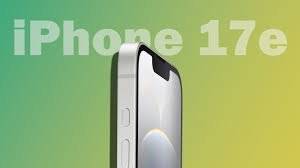
The “notch” is gone, and the Dynamic Island is standard. However, the iPhone 17e might feature slightly thicker bezels than its Pro counterparts to differentiate the tiers.
The Color Palette
If the “e” stands for energetic, the color options will reflect that. Leaks suggest a move away from muted tones toward high-saturation colors. We could see the return of a deep Product(RED), a vibrant cobalt blue, and perhaps a neon-adjacent lime, alongside the standard Starlight and Midnight options.
Software and Performance: The iOS 20 Experience
Launching in 2026 places the iPhone 17e squarely in the launch window for iOS 20. This milestone operating system is expected to lean heavily into on-device intelligence.
Apple Intelligence
The dedicated Neural Engine in the A19 chip will allow the iPhone 17e to run complex Large Language Models (LLMs) locally. This means Siri will be capable of context-aware conversations, real-time translation, and image generation without needing to ping a server. This is a massive privacy win and a performance booster, as local processing is significantly faster than cloud-based alternatives.
Gaming Performance
With the A19, hardware-accelerated ray tracing—once a feature exclusive to consoles and high-end PCs—will be standard on the entry-level iPhone. This opens the door for developers to bring AAA titles to the 17e, blurring the line between a dedicated gaming handheld and a communication device.
Pricing and Availability Strategies
Pricing is the most volatile variable in tech predictions, largely due to fluctuating component costs and global inflation. However, Apple understands the psychology of price ladders better than almost anyone.
The Price Point
Analysts predict the iPhone 17e needs to fill the gap left by the discontinuation of the “Mini” and the aging “SE” models. A starting price of $599 to $699 is the sweet spot.
- $599: Aggressive pricing to capture market share from Android mid-rangers.
- $699: More realistic, protecting margins while still undercutting the $799 flagship standard.
Release Date
Unlike the SE models, which typically launch in the spring, the iPhone 17e is rumored to be part of the main September lineup. Launching it alongside the iPhone 17 Pro allows Apple to present a unified “family” of devices, giving customers a clear choice between “Pro” performance and “Essential” utility right before the holiday season.
Competitive Analysis: The 2026 Battleground
The iPhone 17e will not exist in a vacuum. By 2026, the Android ecosystem will have matured significantly.
Samsung Galaxy S26 FE
Samsung’s “Fan Edition” phones are the direct rival. The S26 FE will likely boast a superior telephoto lens (a feature the iPhone 17e lacks) and a more customizable version of Android. However, Samsung often struggles to match the raw single-core performance of Apple’s silicon.
Google Pixel 10a
The Pixel “a” series dominates the budget photography conversation. Google’s reliance on software magic over hardware muscle means the Pixel 10a will likely take photos that rival the 17e for $100 less. Apple’s advantage here is video quality and ecosystem lock-in—iMessage and FaceTime remain powerful retention tools in North America.
The Verdict
The iPhone 17e wins on longevity and ecosystem integration. An Android competitor might offer a better screen or camera on paper, but the iPhone typically offers higher resale value and 5-7 years of software support, making it a better long-term investment for the average consumer.
Market Impact: Shaping the 2026 Landscape
The release of a high-spec, lower-cost iPhone has ripples that extend beyond Apple’s quarterly earnings.
The “Mid-Range Premium” Shift
The iPhone 17e could signal the end of the “budget” phone as we know it. By bringing 120Hz screens and 2nm chips to the $600 price bracket, Apple forces the entire industry to level up. Competitors can no longer get away with putting 60Hz screens or plastic backs on mid-range devices. The baseline for what constitutes an “acceptable” smartphone experience will rise.
Consumer Behavior and Upgrade Cycles
As phones become more durable and powerful, upgrade cycles are lengthening. People are holding onto phones for three or four years. The iPhone 17e acknowledges this reality. It is not designed to be replaced in a year; it is built to be a reliable workhorse for half a decade. This shift forces manufacturers to focus on services (iCloud, Apple Music, Apple Arcade) for revenue rather than relying solely on hardware sales.
Expert Opinions: What the Analysts Are Saying
Industry insiders are viewing the 17e with cautious optimism.
The Supply Chain Perspective:
Manufacturing analysts note that Apple has been securing long-term contracts for OLED panels from BOE and LG Display specifically for “lower-tier” models. This volume purchasing suggests Apple anticipates the 17e to be a volume seller, potentially outshipping the Pro models for the first time in years.
The Financial Outlook:
Market strategists argue that the 17e is Apple’s answer to the saturation of Western markets. Growth lies in India and Southeast Asia, where price sensitivity is higher. A premium-feeling device at a palatable price point is the Trojan horse needed to capture the growing middle class in these regions.
The Tech Reviewer Sentiment:
Early sentiment from the tech journalism community is that the 17e might be “the boring phone we need.” It doesn’t fold, it doesn’t roll up, and it doesn’t have a 200x zoom. It simply nails the fundamentals—battery, screen, app speed—better than anything else in its class.
The Future of the Essential Smartphone
The iPhone 17e represents a maturity in the smartphone market. We are past the era of wild experimentation for mass-market devices. Now, the goal is refinement and accessibility.
If the rumors hold true, the iPhone 17e will be a device of contradictions: premium yet affordable, simple yet powerful. It signals that Apple is ready to democratize its best features, acknowledging that a great display and a fast chip shouldn’t be luxuries reserved for those willing to spend a month’s rent on a phone.
For the consumer, this is excellent news. It means the “entry-level” is no longer a compromise—it’s just a smart choice.
Join the Conversation
Are you waiting for a high-performance device that doesn’t break the bank? Or do you think Apple is holding back features to protect the Pro models?
We want to hear your take on the 2026 smartphone landscape. Share your thoughts in the comments below, or reach out to us on social media with your wish list for the iPhone 17e.
Subscribe to our newsletter to stay updated on the latest leaks, rumors, and confirmed specs as we inch closer to the official launch.