



Raghav Chadha Proposes Right to Recall for Voters: A New Era in Democratic Participation

Understanding the Right to Recall
The Right to Recall is a legislative provision that empowers voters to remove an elected official from office before their term concludes. This democratic mechanism is designed to enhance accountability, ensuring that representatives remain answerable to their constituents throughout their tenure. The concept of recall elections stems from the recognition that in a representative democracy, the electorate should retain the power to influence political leaders, particularly when they perceive a significant disconnection between the officials’ actions and the voters’ interests.
The rationale behind the proposal for a Right to Recall is multifold. Primarily, it aims to prevent the entrenchment of political leaders who may not fulfill their obligations or who act contrary to the public’s interests. By enabling voters to initiate a recall election, this mechanism serves as a check on the power of elected officials, fostering a sense of responsibility and responsiveness among them. When officials know that they can be removed from office, they may be more inclined to consider the preferences and concerns of the electorate.
The significance of the Right to Recall in bolstering democratic accountability cannot be overstated. It is a means through which citizens can engage more actively in the political process, ensuring that their voices are heard and considered. This provision encourages a culture of participation, where voters are not merely passive observers but active participants in governance. Furthermore, it aligns with the fundamental principles of democracy, where power ultimately resides with the people. Through the Right to Recall, the electorate is empowered to make informed decisions about their representatives, promoting transparency and encouraging better governance overall.
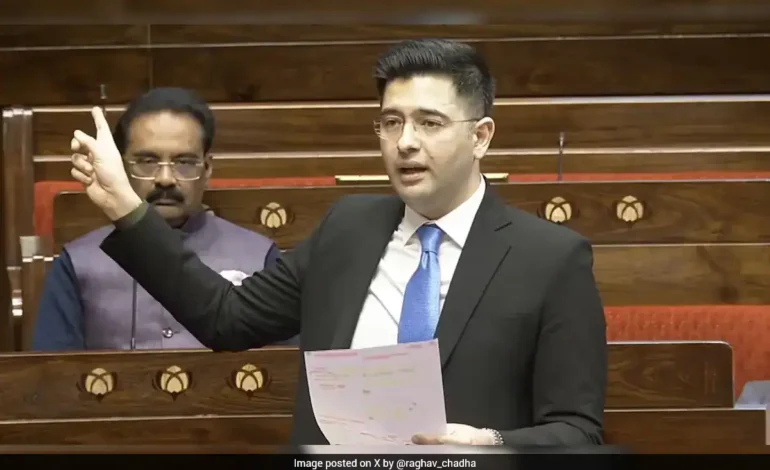
Who is Raghav Chadha?
Raghav Chadha, a prominent figure in Indian politics, is a member of the Aam Aadmi Party (AAP) and serves as a Member of the Legislative Assembly (MLA) in Delhi. Born on December 29, 1988, Chadha emerged from a background steeped in advocacy and public service, having pursued his education at the prestigious University of Delhi and subsequently acquiring a degree from the London School of Economics. His academic achievements and legal acumen have laid a strong foundation for his political endeavors.
Since joining AAP in its formative years, Raghav Chadha has taken on various roles that highlight his commitment to democratic principles. He is known for his eloquent presentations and articulate defense of AAP’s policies, particularly those aimed at enhancing governance and improving public services. As an AAP lawmaker, Chadha has championed several initiatives focused on transparency and accountability in the political system. His efforts have often centered around empowering citizens and ensuring that their voices are represented and heard.
Chadha’s tenure has not been without challenges; however, he has consistently pushed for reforms that resonate with the aspirations of young voters and the broader electorate. His advocacy for innovation in governance reflects a desire to modernize political processes and promote civic engagement. Through initiatives like the Right to Recall, he seeks to enhance democratic participation, allowing voters to hold elected representatives accountable. This proposal has gained traction, illustrating Chadha’s ability to resonate with public sentiment while tackling pressing political issues.
Overall, Raghav Chadha’s background, political career, and previous initiatives underscore his dedication to fostering a more participatory democracy in India. His journey as a young politician continues to inspire many, as he navigates the complexities of the political landscape with a clear vision for the future.
The Current Political Landscape in India
The political landscape in India is characterized by a complex amalgamation of vibrant democracy and significant challenges. A myriad of issues currently afflict the political fabric, particularly concerning accountability among elected representatives, voter disenfranchisement, and dwindling public trust. The essence of democracy rests on the accountability of elected officials towards the citizenry, yet many voters feel disconnected from their representatives. Instances of corruption, broken promises, and a lack of actionable governance have contributed to this sense of disillusionment.
Furthermore, voter disenfranchisement remains a critical concern, where large segments of the population feel that their voices are not adequately represented in political discourses. This malaise is exacerbated by systemic barriers that hinder equitable access to the electoral process. Marginalized communities often encounter additional layers of obstacles in asserting their political rights, leading to a perception that the democratic process is skewed in favor of the politically connected.
Trust in elected representatives is at an all-time low, resulting in cynicism towards political institutions. Many citizens express frustration over the lack of responsiveness from their leaders, which fosters a climate of disengagement from the political process. This scenario sets the stage for proposals such as the Right to Recall, which aims to empower voters and enhance political accountability.
In this context, Raghav Chadha’s proposition for the Right to Recall emerges as a timely and relevant initiative. By enabling voters to remove elected officials from office prior to term completion under certain circumstances, it seeks to restore faith in the democratic framework and promote active participation. Such measures could play a pivotal role in reshaping the political environment, encouraging transparency and accountability in governance.
The Proposal Explained: Key Features of the Right to Recall
The Right to Recall, as proposed by Raghav Chadha, introduces a significant shift in the framework of democratic participation. This initiative empowers voters by allowing them to initiate a recall election for elected representatives who they believe are failing to fulfill their duties effectively. Central to this proposal is the simplicity and transparency of the recall process, which is designed to ensure that the voices of constituents can be heard and acted upon with efficiency.
Initially, a recall petition must be filed by a specific percentage of voters from the constituency—in Chadha’s proposal, this figure is suggested to be 25%. This threshold is intended to demonstrate substantial public sentiment in favor of the recall initiative. Once the petition garners sufficient support, a formal review process will ensue to ensure that all legal prerequisites are fulfilled, thereby maintaining the integrity of the electoral process.
The proposed timeline for initiating recalls is noteworthy as well. Voters will have a defined period, possibly within the elected representative’s term, to petition for a recall. This limit encourages prompt action while ensuring accountability. In instances where the petition is validated, a recall election will be scheduled, allowing voters the opportunity to replace the incumbent with another candidate of their choosing.
Additionally, the proposal highlights the importance of transparency during the recall election process. It mandates that voters receive clear and concise information regarding the reasons for the recall, thereby facilitating informed decision-making. Overall, Chadha’s Right to Recall aims to cultivate a more engaged electorate, reinforcing the principle that elected officials remain accountable to those they serve.
Benefits of Introducing the Right to Recall
The introduction of the Right to Recall for voters represents a significant shift in democratic engagement and accountability. One of the primary benefits of this mechanism is the enhancement of accountability among elected officials. By empowering voters with the option to remove representatives who fail to meet their responsibilities or who act contrary to the public interest, a system of checks and balances is reinforced. This accountability framework can dissuade politicians from engaging in corrupt practices or neglecting their duties, knowing they can be held responsible by their constituents.
Moreover, the Right to Recall empowers voters significantly, providing them with a direct tool for participation in governance. Voters are no longer passive observers in the political process but active participants who can influence their leadership. This empowerment fosters a greater sense of ownership among citizens regarding their political environment and governance outcomes, leading to a more engaged electorate. An increase in voter engagement may also stimulate wider participation in elections and political discourse, facilitating informed decision-making in democratic processes.
Additionally, the Right to Recall has the potential to enhance political engagement among the populace. When citizens know they have the ability to remove elected officials, they may be more inclined to stay informed about political matters and participate in discussions about governance. This heightened awareness can spur more meaningful dialogues on policy decisions and community needs, ultimately elevating the quality of public discourse and civic engagement.
Furthermore, with better governance as a possible outcome, the Right to Recall can contribute to the overall improvement of the political landscape. Elected representatives are more likely to focus on effective policy implementation and community service when they understand that their tenure is contingent on meeting the expectations of the electorate. Consequently, the Right to Recall could lead to a more responsive and responsible government, facilitating improved service delivery and public trust.
Challenges and Criticisms of the Right to Recall
The proposal for a Right to Recall, aimed at enhancing democratic participation, is not without its challenges and criticisms. One significant concern revolves around the potential for misuse of this system. Critics argue that allowing voters to remove elected officials from office could be exploited for political gain or revenge, rather than being used as a genuine mechanism for accountability. This risk raises alarms about the stability of governance and the potential for politically motivated recall efforts, which could disrupt essential governmental functions.
Furthermore, the implementation of the Right to Recall could significantly influence the decision-making processes of elected representatives. Knowing that their tenure can be abruptly ended by recall elections might lead officials to make populist decisions instead of pursuing policies that, while potentially unpopular at the time, may be more beneficial in the long run. Such a shift could undermine the fundamental purpose of electing representatives who are entrusted to act in the best interests of their constituents.
Logistical issues present another layer of complexity in the functioning of the Right to Recall. Organizing a recall election requires considerable resources, time, and administrative capabilities. The process typically involves gathering a substantial number of valid signatures within a specific timeframe, which can be both challenging and expensive. Additionally, the potential for conflicts regarding voter registration and signature verification processes could further complicate the implementation of recall elections, leading to legal disputes and election delays.
In light of these concerns, it is crucial to approach the Right to Recall with a comprehensive framework that addresses these challenges. Safeguards need to be established to ensure that the system is not wielded as a political weapon, while still maintaining the essential democratic principle of accountability. Only through careful consideration can the benefits of the Right to Recall be realized without compromising the integrity of the democratic process.
Comparative Analysis: Right to Recall in Other Countries
The Right to Recall, an innovative mechanism for fostering democratic engagement, has been implemented with varying degrees of success in other nations such as the United States and Brazil. These examples provide valuable insights into the potential outcomes of adopting such a policy in India, as proposed by Raghav Chadha.
In the United States, the Right to Recall is particularly prevalent at the state and local levels. The process allows voters to remove elected officials from office before the end of their term through a petition campaign, followed by a referendum. A prominent case occurred in California in 2003, when Governor Gray Davis was recalled and subsequently replaced by Arnold Schwarzenegger. This instance demonstrates both the power and challenges associated with the mechanism, as the recall process can be highly politicized and costly, potentially swaying public interest through emotional appeals rather than policy effectiveness.
Brazil also serves as a key example of the Right to Recall in practice, specifically through their “Recall Law” established in 2009. In this South American nation, it is possible for voters to initiate a recall vote for elected officials, not only in executive roles but also for legislative positions. However, the Brazilian experience has illustrated hurdles such as the required threshold for initiating a recall vote and the subsequent political backlash against those who pursue recalls. Critics argue that while the policy aims to enhance accountability, it may result in increased partisanship and instability, compelling elected officials to cater to popular whims rather than engage in long-term policymaking.
Both instances highlight the complexity of the Right to Recall in established democracies, revealing that while the mechanism is designed to empower voters, it can also lead to unintended consequences that challenge political stability and nuanced governance. Understanding these dynamics can provide critical lessons as India considers the implications of this democratic tool.
Public Opinion: What Do Voters Think?
The proposition of a Right to Recall, as advocated by Raghav Chadha, has sparked considerable debate among the Indian electorate. Recent surveys indicate a significant portion of the population is aware of this legislative proposal and holds varying opinions regarding its implications on democratic participation. According to a poll conducted by an independent agency, approximately 65% of voters expressed support for the initiative, seeing it as a means to enhance accountability among elected officials. This sentiment is echoed by numerous political analysts who believe that empowering voters with the option to recall representatives could lead to increased engagement in the democratic process.
Expert opinions further underscore the importance of this proposal. Analysts argue that the Right to Recall could serve as a powerful tool against political apathy. By giving voters the authority to remove unsatisfactory politicians, the initiative might encourage elected officials to act in accordance with their constituents’ needs and preferences. A political analyst from a leading university noted that such a mechanism could help restore faith in democracy, particularly in a nation where many citizens feel disenchanted with the political landscape.
However, there are voices of caution among scholars and politicians alike. Some experts posit that while the Right to Recall has the potential to enhance accountability, it might also lead to political instability if misused by voters for partisan purposes. The fear is that this could encourage constant campaigning rather than focus on effective governance. Hence, while many citizens support the idea, there remains an ongoing debate about the safeguards that would be necessary to ensure that such power is exercised judiciously.
Conclusion: The Future of the Right to Recall in India
The recent proposal by Raghav Chadha advocating for the right to recall presents a significant moment in the evolution of democratic engagement in India. By enhancing the power of voters, this initiative could lead to a more accountable political landscape. The right to recall allows voters to remove elected representatives from office before their term ends, underlining the principle that leaders must remain answerable to the electorate. As such, this proposal aligns closely with the urgent demand for greater transparency and accountability within the political system.
However, while empowering voters to have this authority is a laudable goal, it is essential to consider implications for electoral stability. The ability to recall officials could potentially lead to political turmoil and frequent changes in leadership, as disenfranchised voters may act impulsively in response to momentary dissatisfaction. Such instability may undermine governance and complicate the execution of long-term policy initiatives, a crucial aspect of effective leadership. Therefore, a balanced approach is vital; implementing a right to recall should involve thoughtful safeguards to prevent arbitrary decisions that could lead to chaos.
In essence, the success of the right to recall in enhancing democratic participation hinges on finding an equilibrium between empowering voters and maintaining the structural integrity of elected offices. As India’s political landscape continues to evolve, fostering a culture of civic engagement will be necessary to sustain and nurture this transformative proposal. Thus, the discussions surrounding the right to recall must be approached with caution, ensuring that the democratic process remains robust and capable of withstanding the potential challenges it presents.