


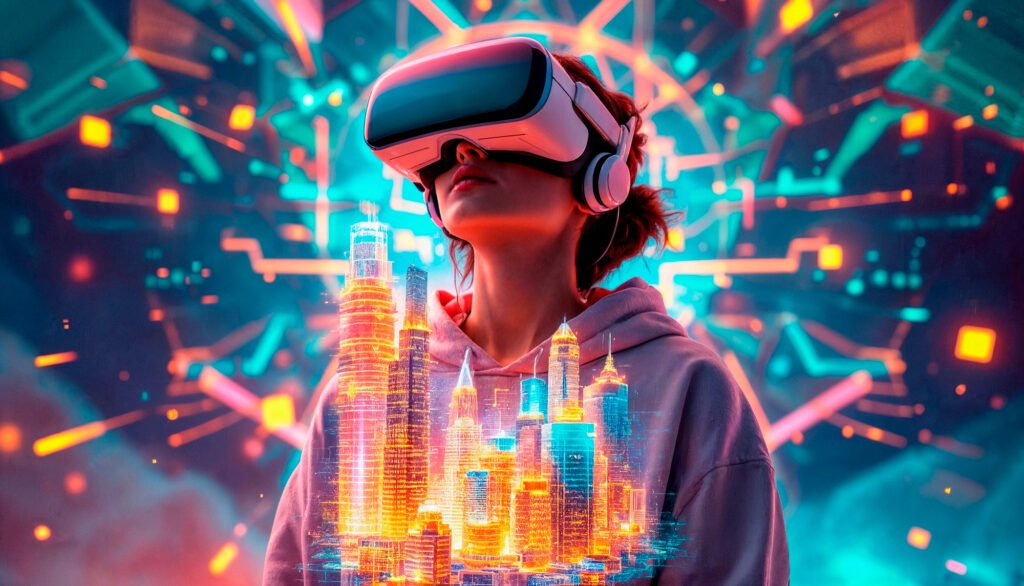
We have spent the last decade adapting to technology that helps us do things. But as we move deeper into 2026, we are crossing a threshold into an era where technology does things for us. The shift is subtle but profound. It is no longer just about using a tool to write an email or turn on the lights; it is about trusting a system to manage your calendar, optimize your home’s energy usage, and navigate the web on your behalf.
This year marks a definitive turning point. The experimental technologies of the early 2020s—generative AI, early spatial computing, and decentralized networks—have matured into robust infrastructure. We are moving from assistive AI, which requires constant prompting, to autonomous systems capable of reasoning and executing complex tasks.
This guide explores the defining technology trends of 2026. From the rise of autonomous AI agents and the next generation of smart devices to the evolution of the internet itself, we will examine how these innovations are reshaping business, society, and daily life. Whether you are a business leader, a developer, or simply a tech enthusiast, understanding these shifts is essential for navigating the years ahead.
AI Agents: The Rise of Autonomous Intelligence
The buzzword of 2023 was “chatbot.” The reality of 2026 is the “agent.” While chatbots were impressive for their ability to converse, they were fundamentally passive. They waited for input. AI agents, by contrast, are active. They perceive, reason, and act.
What Are AI Agents?
At their core, AI agents are software programs designed to achieve specific goals without constant human intervention. The distinction between a chatbot and an agent is the difference between a consultant and an employee. A chatbot gives you advice on how to book a flight; an agent books the flight, adds it to your calendar, arranges your ride to the airport, and sends an itinerary to your partner.
This shift involves a move from simple task automation to complex decision-making. Agents can break down a high-level goal—like “plan a marketing campaign”—into a series of sub-tasks, execute them, and adjust their approach based on the results. They possess a degree of agency that previous software lacked, allowing them to function as digital workers rather than just digital tools.
How AI Agents Are Being Used in 2026
In the business world, agents are revolutionizing operations. Customer support has moved beyond scripted responses to fully autonomous resolution. Agents can now process refunds, update shipping details, and negotiate simple contract terms within pre-set parameters, freeing up human agents for high-empathy, complex problem-solving.
On a personal level, productivity has been reimagined. Digital assistants are no longer just voice-activated timers. They are proactive life managers. They draft emails based on your writing style, reorganize your schedule when a meeting runs late, and even curate news digests based on your specific professional interests. The friction of digital administration is disappearing, replaced by a layer of intelligent automation.
Risks, Ethics & Governance of AI Agents
With increased autonomy comes increased risk. If an agent can make decisions, who is responsible when it makes a mistake? The governance of AI agents has become a critical topic in 2026. Issues of data privacy are paramount; for an agent to be truly effective, it needs access to your emails, calendar, and financial data. Ensuring this data remains secure and under user control is the primary challenge for tech companies.
Regulation is playing catch-up. Governments are establishing frameworks to ensure “responsible AI”—mandating transparency in how agents make decisions and requiring “human-in-the-loop” protocols for high-stakes actions, such as financial transactions or medical advice.
Smart Devices Get Smarter in 2026
The Internet of Things (IoT) was once a fragmented mess of incompatible gadgets. In 2026, smart devices have finally coalesced into seamless ecosystems, driven by on-device AI that processes data locally rather than sending everything to the cloud.
The Evolution of Smart Homes
The smart home is no longer about novelty; it is about efficiency and intuition. AI-powered appliances communicate with one another to optimize energy usage. A dishwasher might delay its cycle until energy rates are lowest, or an HVAC system might learn the thermal properties of a house to heat it more efficiently.
Sustainability is the driving force here. Homes are becoming active participants in the energy grid, managing solar storage and consumption automatically. The “smart” aspect has shifted from remote control via a phone app to genuine automation, where the house manages itself based on the habits and preferences of its occupants.
Wearables Beyond Fitness
Wearable technology has graduated from step-counting to life-saving. The focus has shifted heavily toward health monitoring and preventive care. Watches and rings now track complex biomarkers, offering early warnings for cardiovascular issues or glucose spikes. They are diagnostic tools, constantly feeding data into AI models that help users optimize their longevity.
Simultaneously, smart glasses and spatial computing hardware have become lighter and more socially acceptable. They are no longer bulky headsets but everyday accessories that overlay digital information onto the physical world, aiding in navigation, translation, and real-time information retrieval without breaking eye contact with reality.
Smart Cities & Infrastructure
The intelligence of our devices is spilling out into the streets. Smart cities use AI to manage traffic flow dynamically, reducing congestion and emissions. Traffic lights adapt in real-time to vehicle density, while public transport systems adjust schedules based on predictive demand models.
Public services are also seeing an AI upgrade. Waste management systems notify collection trucks when bins are full, and sensors on infrastructure detect cracks in bridges or roads before they become safety hazards. The city of 2026 listens, watches, and reacts to the needs of its citizens.
The Next Internet Evolution
The internet itself is undergoing a structural change. We are moving away from the flat, 2D web of pages and links toward a more immersive, spatial, and decentralized network.
From Web2 to Web3—and Beyond
While the hype cycles of crypto have cooled, the underlying utility of Web3 technologies remains. 2026 sees a more mature approach to decentralization. Users are demanding true digital ownership of their data and assets. The concept of “interoperable digital identities” is gaining traction—a single, secure login that you own, rather than one provided by a tech giant, which carries your history, reputation, and assets across different platforms.
Spatial Internet & Extended Reality (XR)
The internet is becoming a place you enter, not just look at. Extended Reality (XR) is transforming how we work and learn. Medical students practice surgeries in hyper-realistic VR simulations; architects walk clients through digital twins of buildings before a single brick is laid.
In commerce, the “spatial web” allows for virtual try-ons that actually work and showrooms that exist entirely in digital space. This isn’t just about gaming; it is about adding a layer of digital utility to the physical world, blurring the lines between offline and online interactions.
Faster, Smarter Connectivity
None of this works without robust piping. 5G has reached maturity, providing the reliable, high-bandwidth connection required for autonomous agents and XR. Meanwhile, early 6G use cases are emerging in industrial settings, offering near-zero latency for robotic control.
Edge computing is growing alongside these networks. To process data for AI agents and smart cars instantly, computation needs to happen closer to the user, not in a distant server farm. This shift toward the “edge” ensures that the smart devices of 2026 are responsive and reliable.
Technology Trends Changing Work & Business
The workplace is the laboratory where these trends are being tested most rigorously. The fear of AI replacing jobs has shifted into a more nuanced reality of adaptation and augmentation.
AI-Augmented Workforce
The standard workflow of 2026 is “Human + AI.” We are seeing the emergence of the AI-augmented workforce, where employees are expected to delegate routine cognitive tasks to agents. This collaboration allows humans to focus on strategy, creativity, and interpersonal relationships—areas where AI still struggles.
This shift is creating new job roles. We now have “Agent Orchestrators” who manage fleets of AI workers, and “AI Ethicists” who ensure corporate algorithms align with company values. The skill demands have changed; proficiency in prompting and managing AI systems is now as fundamental as Microsoft Excel skills were a decade ago.
Automation for SMEs & Startups
Advanced technology is no longer the exclusive domain of the Fortune 500. Low-code and no-code platforms have democratized app creation and automation. A small business owner can now build a custom inventory management system or a customer service bot without writing a single line of code.
This allows startups to scale with unprecedented cost efficiency. Small teams can compete with large incumbents by leveraging AI agents to handle the operational load of a much larger company. The barrier to entry for entrepreneurship has arguably never been lower.
Cybersecurity & Privacy in 2026
As our dependence on digital systems grows, so does the threat landscape. The battle between security professionals and cybercriminals has entered an AI-vs-AI phase.
AI-Powered Cyber Threats
Hackers are using AI to create more sophisticated attacks. Phishing emails are no longer riddled with typos; they are hyper-personalized and indistinguishable from legitimate communications. Deepfake voice and video technology is being used to bypass biometric security and manipulate corporate transfers.
Zero-Trust Security Models
In response, the industry has adopted “Zero-Trust” security models as the standard. The old method of “trust but verify” is dead. The new standard is “never trust, always verify.” Every access request, whether from a CEO or a smart thermostat, is authenticated and authorized continuously.
Personal data ownership is also central to security. Privacy-preserving technologies, which allow data to be analyzed without being exposed, are becoming a competitive advantage for companies that want to earn consumer trust.
Consumer Behavior & Tech Adoption Trends
Technology does not exist in a vacuum; it is shaped by how people choose to use it. In 2026, consumer behavior is defined by a mix of enthusiasm and caution.
Trust in AI Systems
Trust is the new currency. Consumers are becoming skeptical of “black box” algorithms. They want to know why an AI recommended a product or denied a loan. Companies that prioritize explainability—showing their work—are winning market share.
Subscription vs. Ownership Models
The “usership” economy continues to expand. Why buy a high-end computer when you can stream computing power from the cloud? However, there is a growing counter-movement valuing physical ownership and offline capability, driven by privacy concerns and a desire to disconnect.
Ethical and Sustainable Tech Choices
Finally, sustainability is a non-negotiable for the 2026 consumer. There is intense scrutiny on the carbon footprint of training large AI models and the e-waste generated by smart devices. Tech adoption is increasingly viewed through an ethical lens, with consumers favoring brands that demonstrate a commitment to green computing and circular manufacturing.
FAQ Section
Q1: What are the top technology trends of 2026?
The top trends include the rise of autonomous AI agents, the integration of AI into smart home ecosystems, the evolution of the spatial internet (XR), and the democratization of automation for small businesses.
Q2: How are AI agents different from chatbots?
Chatbots are passive; they wait for you to ask a question and provide an answer. AI agents are active and autonomous; they can be given a goal and will execute multiple steps, use various tools, and make decisions to achieve that goal without constant supervision.
Q3: What is the next evolution of the internet?
The next evolution involves a move toward a spatial web (AR/VR experiences), decentralized identity (Web3 principles), and edge computing. It creates an internet that is more immersive and gives users greater control over their data.
Q4: Are smart devices safe in 2026?
Security has improved with “Zero-Trust” models, but risks remain. Devices now process more data locally (on-device AI) to protect privacy, but the interconnected nature of smart homes requires users to remain vigilant about software updates and network security.
Q5: How will technology change jobs in the future?
Jobs will shift from execution to orchestration. Routine cognitive tasks will be handled by AI agents, requiring humans to focus on strategy, oversight, and creative problem-solving. New roles centering on managing and auditing AI systems will become common.
Final Thoughts on Innovation with Responsibility
As we look at the landscape of 2026, it is clear that we are in a period of rapid acceleration. The convergence of AI agents, smart infrastructure, and a spatial web offers incredible opportunities to improve human health, productivity, and creativity.
However, these tools are only as good as the intent behind them. The challenge for the next decade isn’t just about building faster chips or smarter models; it’s about integrating these powerful technologies into our lives responsibly. We must demand transparency, prioritize privacy, and ensure that the benefits of this tech evolution are accessible to all.
The future is autonomous, immersive, and intelligent. Are you ready to adapt?
Stay ahead of the curve. Subscribe to our newsletter today for weekly insights on how to leverage these trends for your business and career.
Related Blog post:
OPPO K14x 5G Review: Smooth Display & 5G Value Smartphone
Apple iPhone 17e Launch Imminent: Expected Features, Price & What It Means for 2026 Smartphones
Why Apple’s iPhone 17e Could Be the Biggest Smartphone Launch of Early 2026
Here’s what comes next for Wythe High School plans
Technology Trends of 2026: AI Agents, Smart Devices & the Next Internet Evolution


