



Global Politics in 2026: Key Power Shifts, Elections & Policies Shaping the World
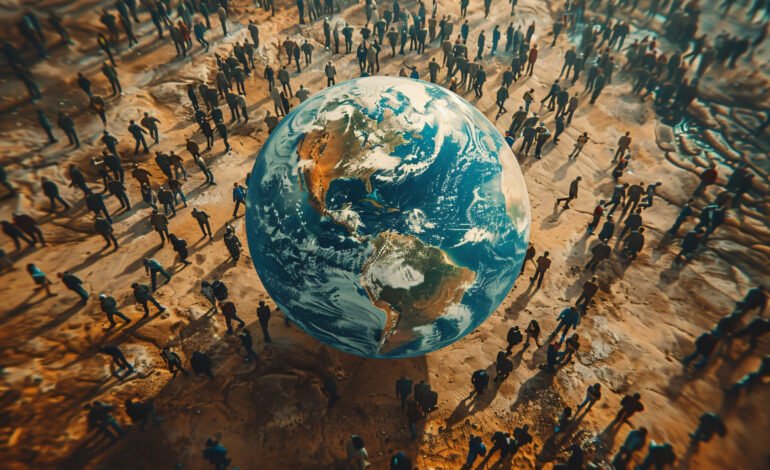

If the last five years taught us anything, it’s that stability is fragile. But 2026 isn’t just another year of navigating the aftermath of pandemics or regional conflicts; it marks a distinct turning point in the geopolitical landscape. We are moving away from the reactive scrambling of the early 2020s into a period of calculated, high-stakes realignment. The dust hasn’t settled—it’s being rearranged into new, unfamiliar shapes.
Post-pandemic economic recoveries have diverged, creating uneven playing fields. Old alliances are being stress-tested by new conflicts, while the comforting simplicity of a unipolar or bipolar world is rapidly fading. We are witnessing the solidification of a multipolar order where influence is diffused, alliances are transactional, and the margin for diplomatic error is thinner than ever.
Understanding these shifts isn’t just an academic exercise for political scientists. The decisions made in government halls this year will ripple outward, affecting supply chains, energy prices, travel regulations, and the technology in our pockets. This analysis explores the critical power shifts, pivotal elections, and reshaping policies defining 2026, offering a roadmap to navigate this complex new era.
The Shift Toward a Multipolar World Order
For decades, global politics felt like a game with one or two main characters. That era is definitively over. In 2026, we are seeing the acceleration of a multipolar world order—a complex web of competing centers of power rather than a single hierarchy. The dominance of the United States, while still significant, is no longer the sole gravitational force in international relations.
This diffusion of power means that international consensus is harder to build. Regional powers like Turkey, Saudi Arabia, and Brazil are no longer just participating in global dialogues; they are driving them, often pursuing non-aligned strategies that prioritize national interest over traditional bloc loyalty.
The impact on global decision-making is profound. Issues like climate change and nuclear proliferation require near-unanimous cooperation, yet the fragmentation of power makes binding agreements elusive. We are moving toward “minilateralism”—small, ad-hoc coalitions of willing nations tackling specific issues—rather than sweeping global treaties.
Major Power Blocs & Their Influence in 2026
While power is fragmenting, the traditional heavyweights still command the most attention. Their internal priorities and external maneuvers set the tempo for the rest of the world.
United States
In 2026, the United States finds itself looking inward as much as outward. Domestic political polarization continues to influence foreign policy, with legislative gridlock often slowing down international commitments. However, the U.S. remains the central architect of security alliances in the Indo-Pacific and the North Atlantic. Washington’s focus has shifted from broad nation-building to strategic containment and maintaining technological supremacy, particularly in semiconductors and AI.
China
Beijing’s strategy has evolved from rapid expansion to strategic consolidation. Facing internal economic headwinds and an aging population, China is doubling down on high-tech manufacturing and green energy dominance. Geopolitically, its focus remains on the Global South, using trade and infrastructure investment to secure resources and diplomatic support. In Asia, China continues to assert its presence, challenging American naval dominance and deepening economic ties with neighboring states despite lingering territorial disputes.
European Union
The EU is in a decisive phase of defining its “strategic autonomy.” No longer content to rely solely on the U.S. for security or China for trade, Brussels is attempting to forge a third path. Internal unity remains its biggest hurdle, with member states disagreeing on fiscal integration and migration policies. However, on regulation—specifically regarding climate and digital technology—the EU remains a global superpower, setting standards that the rest of the world is forced to follow.
Russia
Russia’s role in 2026 is defined by resilience and redirection. Sanctions have forced a permanent pivot to the East, deepening economic dependency on Asian markets. Its strategic positioning is less about global leadership and more about being a spoiler to Western interests. By leveraging energy exports and military partnerships in Africa and the Middle East, Russia ensures it remains a critical, if disruptive, voice in global affairs.
Key Elections Around the World in 2026
Democracy is on the ballot this year, with several high-stakes elections capable of altering the geopolitical map. These aren’t just local contests; their outcomes will determine trade policies, alliance durability, and regional stability.
In Latin America, pivotal elections in major economies could signal a shift between left-leaning administrations and market-friendly conservatives, impacting lithium mining rights and trade deals. In Europe, parliamentary elections in key member states will test the continent’s resolve on climate policies and support for Ukraine.
Potential leadership changes in these regions could lead to market volatility. Investors are watching closely, knowing that a change in government often leads to a regulatory overhaul. If populist candidates gain ground, we could see a rise in protectionist policies that complicate global trade. Conversely, victories for centrist coalitions could stabilize markets but might lack the political capital to enact bold reforms.
Policies Reshaping the Global Landscape
Beyond the drama of elections, the gears of global politics are turned by policy. Four key areas are rewriting the rules of engagement in 2026.
- Trade and Economic Policies: “Friend-shoring” is the buzzword of the year. Nations are actively moving supply chains away from geopolitical rivals to friendly or neutral countries. This is fragmenting the global economy into distinct trading blocs, raising costs but increasing security.
- Climate and Environmental Commitments: The deadline pressure for 2030 targets is mounting. We are seeing a shift from voluntary corporate pledges to strict government mandates. Carbon border taxes are becoming standard, forcing developing nations to green their industries or lose access to lucrative Western markets.
- Defense and Security Strategies: Disarmament is out; deterrence is in. Defense budgets are swelling globally, with a focus on autonomous systems, cyber warfare capabilities, and space assets. Security is no longer just about tanks; it’s about protecting satellite constellations and undersea cables.
- Technology and Data Governance: The “Splinternet” is real. Different regions are enacting incompatible rules regarding data privacy and AI development. The digital landscape is increasingly partitioned by digital borders, forcing tech giants to operate distinct ecosystems for the US, EU, and China.
The Role of Emerging Economies
The term “emerging economies” feels insufficient to describe the influence of the Global South in 2026. India continues its trajectory as a major economic pole, balancing ties between the West and Russia while championing the interests of developing nations. Its growing tech sector and massive demographic dividend make it an essential partner for any global power.
Southeast Asia (ASEAN) and Latin America are leveraging their critical minerals—essential for the green transition—to extract better trade deals. They are no longer just resource exporters but are demanding that processing and manufacturing happen on their soil. This “resource nationalism” is reshaping global supply chains.
Furthermore, South–South cooperation is deepening. Trade between emerging economies is growing faster than trade with the developed world. New financial mechanisms and payment systems are being tested to bypass traditional dollar-dominated routes, insulating these nations from Western sanctions.
Geopolitical Flashpoints to Watch
While diplomacy works overtime, the threat of conflict remains the elephant in the room.
- Regional Conflicts: Unresolved tensions in the Middle East and Eastern Europe continue to simmer. Even frozen conflicts carry the risk of thawing rapidly due to miscalculation or proxy interference.
- Border Disputes: In the South China Sea and the Himalayas, territorial claims remain a constant source of friction. These areas are heavily militarized, meaning a minor skirmish has the potential to escalate into a major standoff.
- Energy and Resource Competition: As the Arctic ice melts, the race for shipping routes and untapped resources heats up. Similarly, the scramble for cobalt and lithium in Africa is leading to intense diplomatic and commercial rivalry.
- Cybersecurity: The battlefield is increasingly digital. State-sponsored cyberattacks targeting critical infrastructure—power grids, banking systems, and hospitals—are becoming a standard tool of coercion, operating in the “gray zone” between peace and war.
Global Institutions Under Pressure
The institutions built after World War II—the UN, the IMF, the World Bank—are creaking under the weight of 2026’s challenges. The United Nations Security Council faces continued paralysis due to veto power, leading to louder calls for reform and the inclusion of permanent members from Africa and Latin America.
Meanwhile, the WTO struggles to enforce rules in an era of protectionism and subsidies. Parallel institutions led by emerging powers are gaining traction, offering loans and development aid without the political strings often attached to Western money. This institutional fragmentation makes coordinating responses to global crises, like pandemics or financial crashes, significantly harder.
How Global Politics Affects Everyday Life
It is easy to tune out the noise of international summits, but the downstream effects land directly on your doorstep.
- Economy and Inflation: Geopolitical tension drives volatility. Trade wars increase the cost of imported goods, while instability in energy-producing regions keeps gas and electricity prices unpredictable.
- Trade, Travel, and Migration: Visa regimes are becoming stricter as security concerns rise. Migration driven by climate change and conflict is reshaping demographics and labor markets, often becoming a hot-button political issue.
- Technology Access: The tech war determines what phone you can buy and what apps you can use. As supply chains bifurcate, consumer electronics may become more expensive or segmented by region.
What the World Could Look Like Beyond 2026
Looking further ahead, we face a fork in the road. One path leads to a “fortress world”—highly fragmented, protectionist, and constantly on the brink of conflict. The other path sees the stabilization of the multipolar order, where competitive coexistence allows for cooperation on existential threats like climate change.
The risks are obvious: miscalculation leading to war, or a runaway climate crisis due to lack of coordination. But opportunities exist. The rise of the Global South could democratize global prosperity. Advances in green technology, driven by fierce competition, could accelerate the energy transition faster than cooperation ever did. The only certainty is that the old maps no longer work; we are drawing new ones as we go.
FAQ Section
Q1: What are the biggest global political trends in 2026?
The most significant trends include the shift to a multipolar world order, the fragmentation of the global economy through “friend-shoring,” the rise of the Global South as a decisive political bloc, and the increasing militarization of cyberspace and outer space.
Q2: Why is the world becoming more multipolar?
The economic and military rise of non-Western powers like China and India, combined with a relative decline in U.S. hegemony, has distributed power more evenly. Regional powers are also asserting more autonomy, refusing to align strictly with any single superpower.
Q3: Which elections are most important in 2026?
Key parliamentary and presidential elections in Latin America and Europe will be critical. These will determine the future of environmental regulations, trade agreements, and the stability of major alliances like the EU and NATO.
Q4: How do global politics affect the economy?
Political instability creates market volatility. Sanctions, tariffs, and trade wars increase the cost of goods and disrupt supply chains. Conversely, strong diplomatic ties can open new markets and lower prices for consumers.
Q5: What geopolitical risks should we watch in 2026?
Primary risks include the escalation of regional conflicts in Eastern Europe and the Middle East, cyberattacks on critical infrastructure, and confrontation over resource-rich areas like the South China Sea and the Arctic.
The political landscape of 2026 is defined by complexity and rapid change. From the halls of power in Washington and Beijing to the voting booths in emerging democracies, the decisions made this year will echo for decades. While the era of easy predictability is gone, a multipolar world offers new opportunities for diverse voices to shape the global narrative.
Staying informed isn’t just about reading the headlines; it’s about understanding the deep currents moving beneath them. In a world of uncertainty, knowledge is the only true stabilizer.
Want to stay ahead of the curve? Subscribe to our newsletter for weekly deep dives into the geopolitical events that matter most to your business and your life.
Related Blog Post:
The US Deal: Unpacking Rahul Gandhi’s Concerns on India’s Data and Trade Future
Is Australian democracy in good health?
Understanding the Unrest: Why Sri Lankans are Protesting in the Streets
Raghav Chadha Proposes Right to Recall for Voters: A New Era in Democratic Participation
What Michelle Obama told Viola Davis ahead of ‘The First Lady’
Global Politics in 2026: Key Power Shifts, Elections & Policies Shaping the World